Velox UL30 Pack
Engineered for simplicity.
Designed for speed.
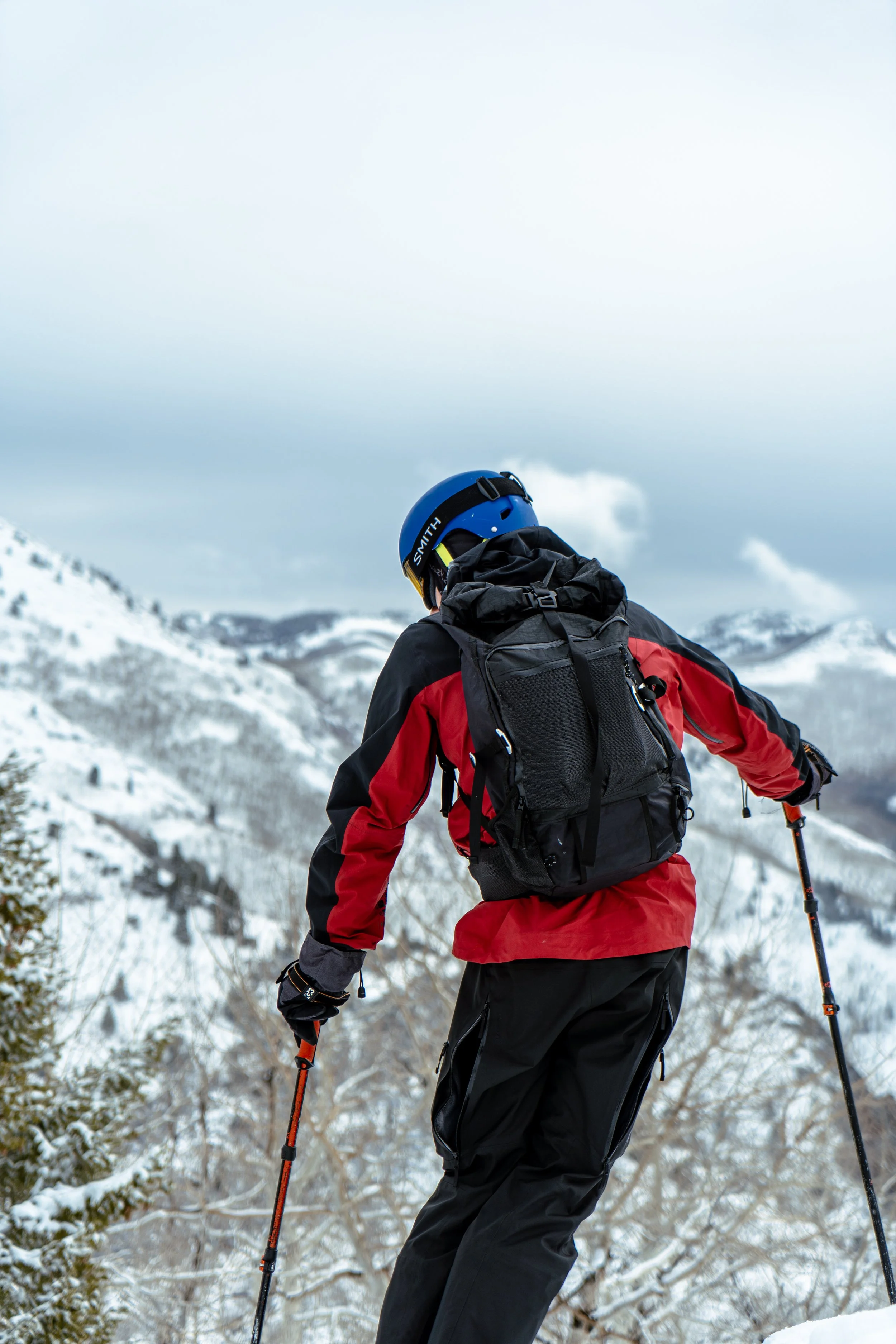
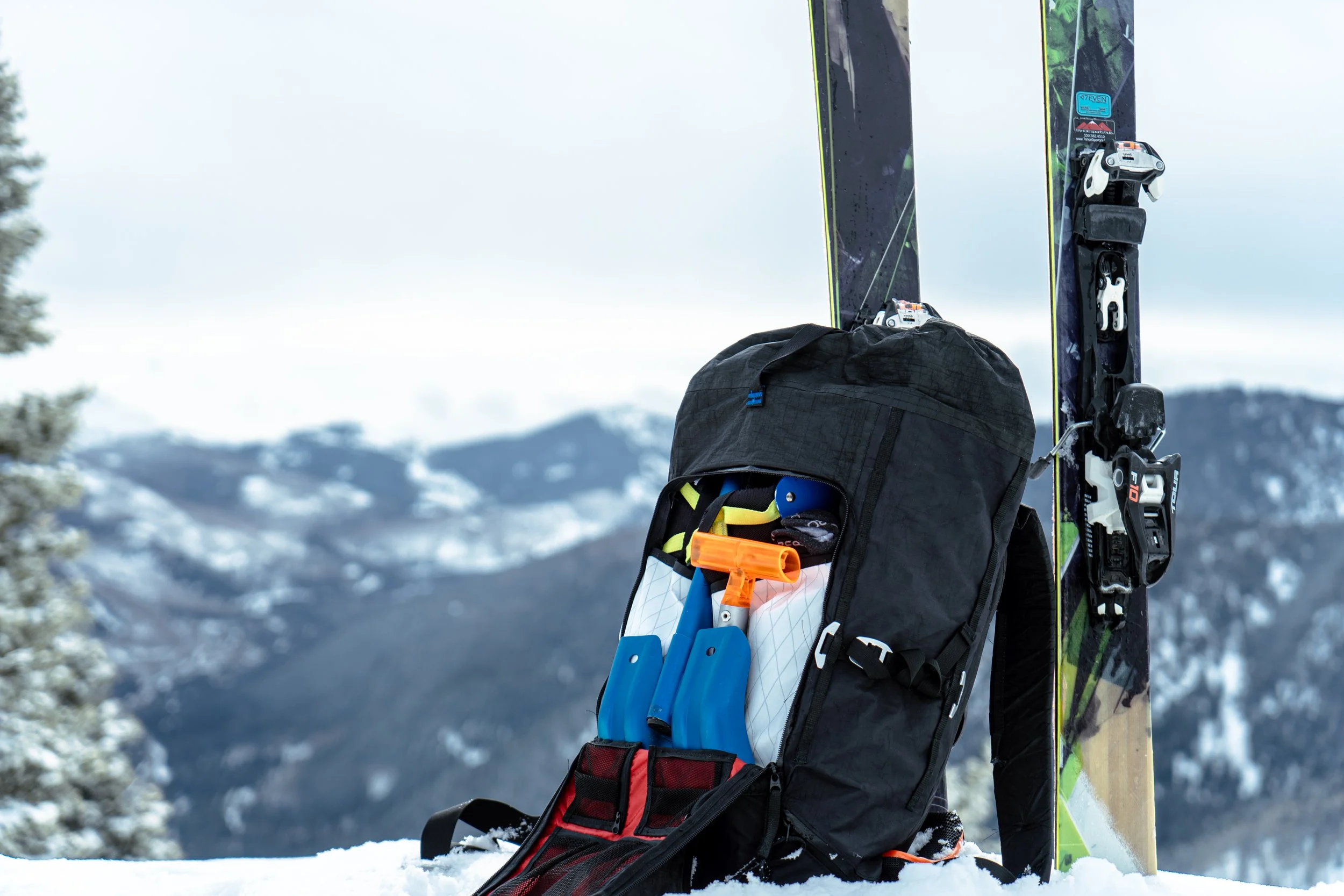
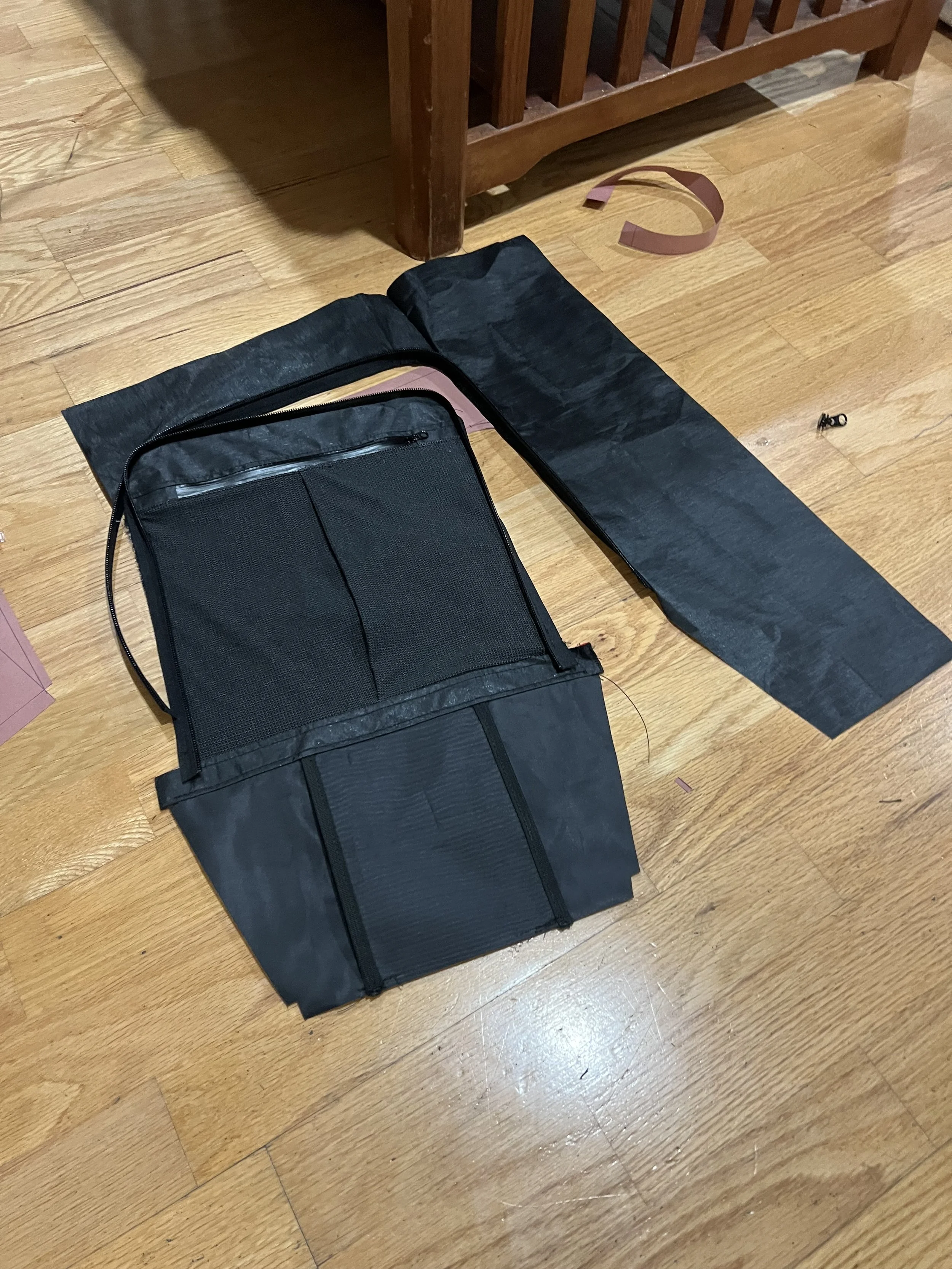
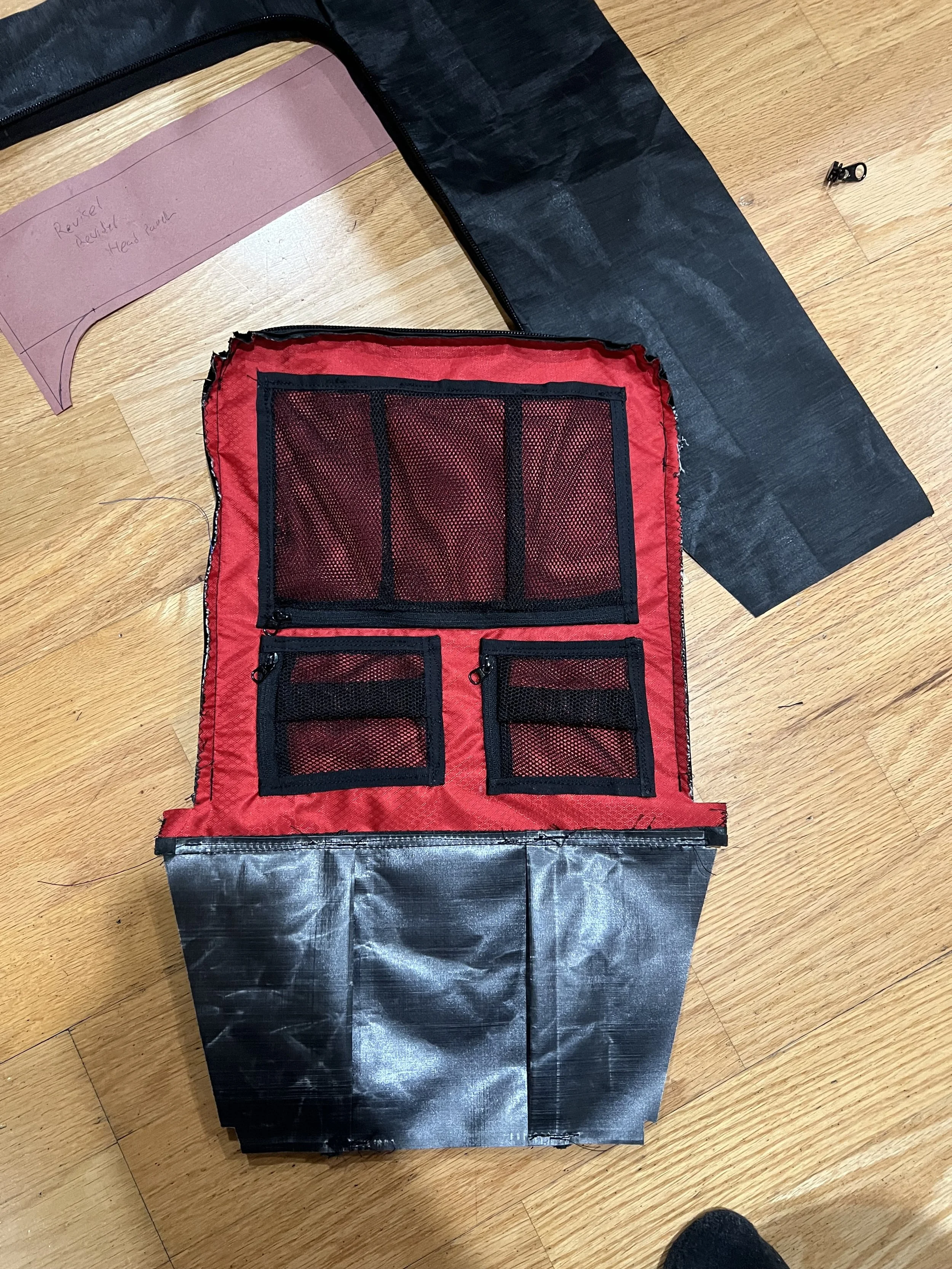
The Velox UL 30 ultralight backcountry touring pack embodies its name – "velox," derived from the Latin for swift or rapid – by prioritizing uncompromising readiness with immediate medical access as a core tenet. In critical moments, seconds count. Its rapidly deployable med kit compartment ensures essential supplies are accessible instantly and without hesitation, allowing for decisive action when it matters most.
Features + Tech Specs
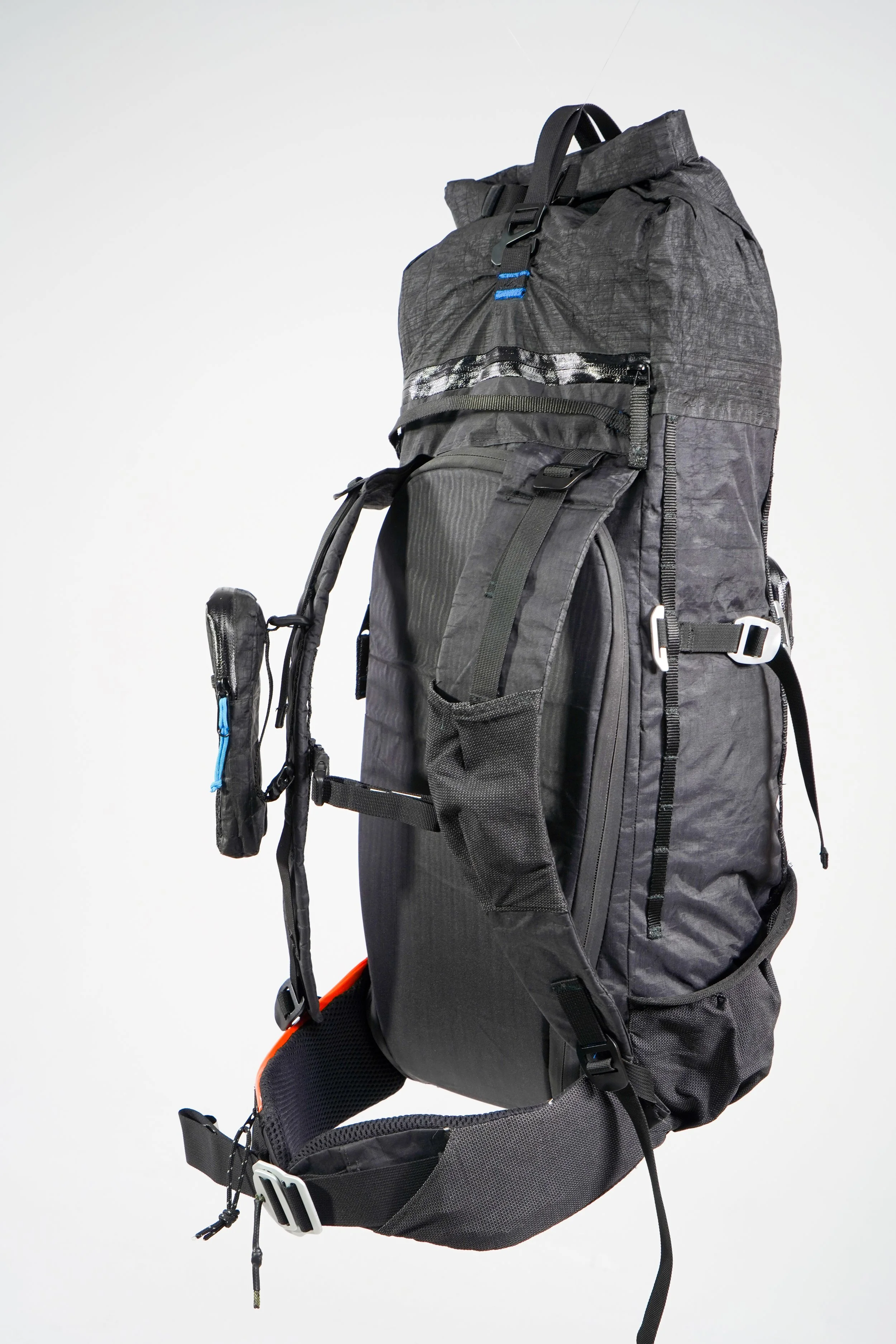
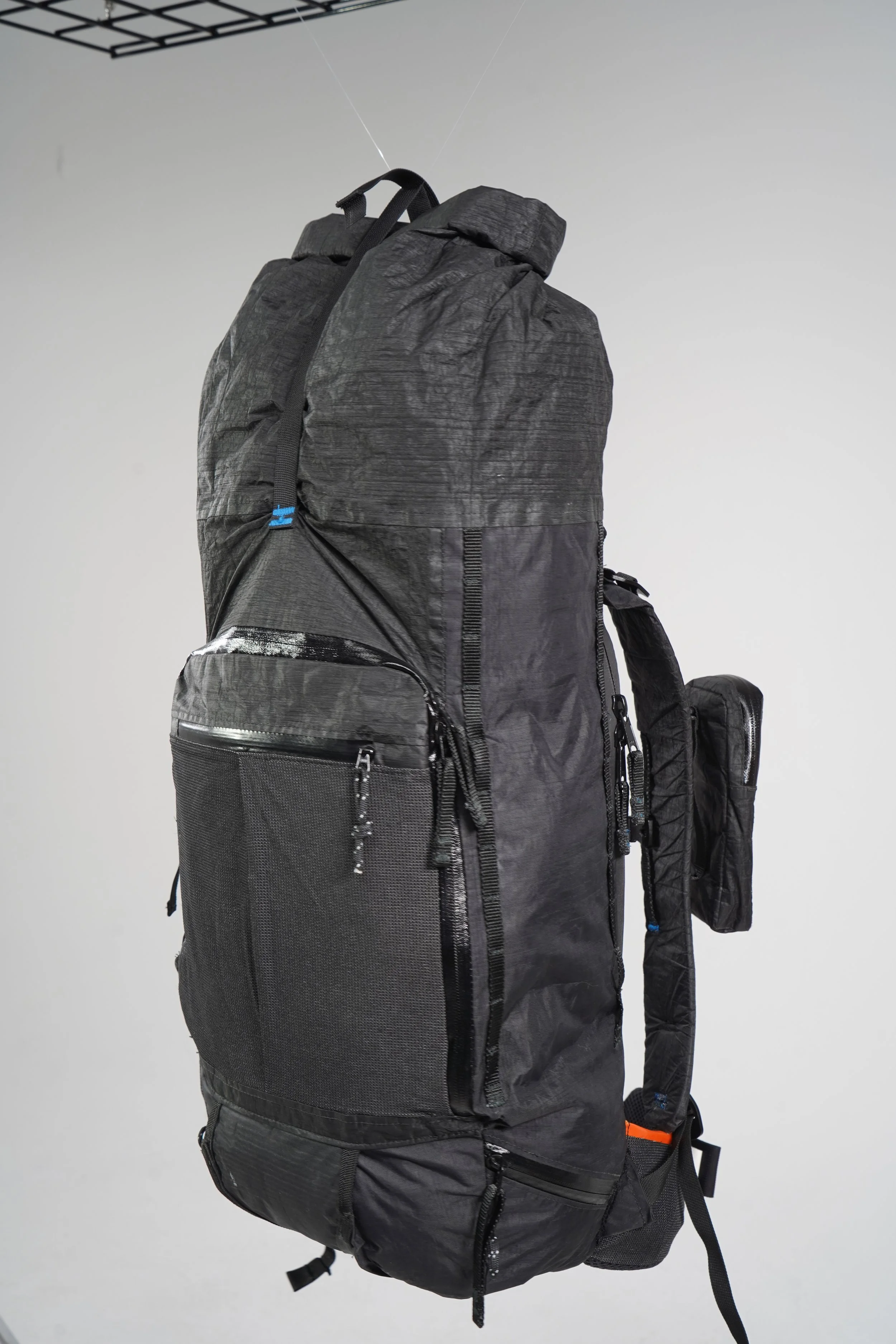
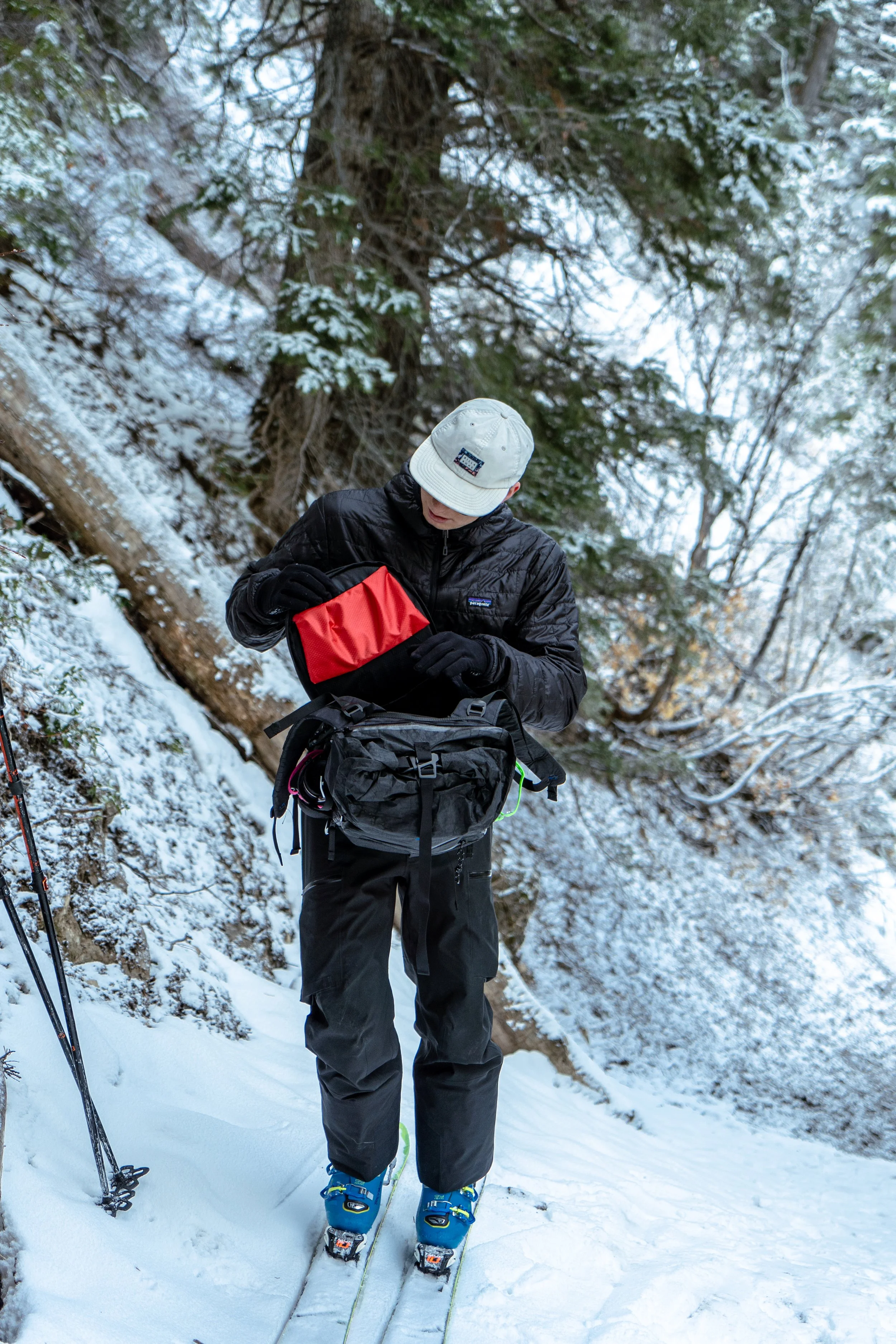
Back panel access
Integrated medical kit
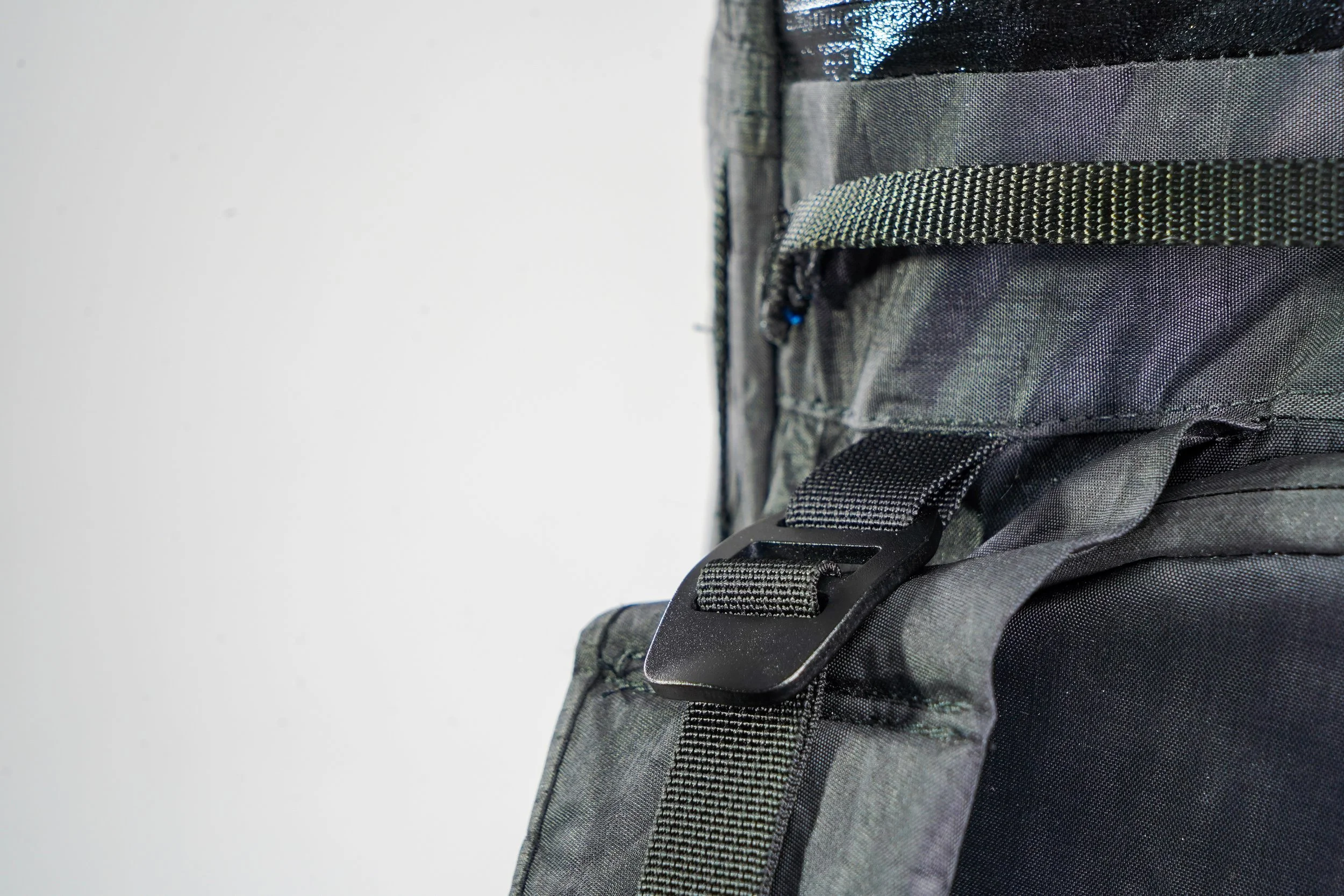
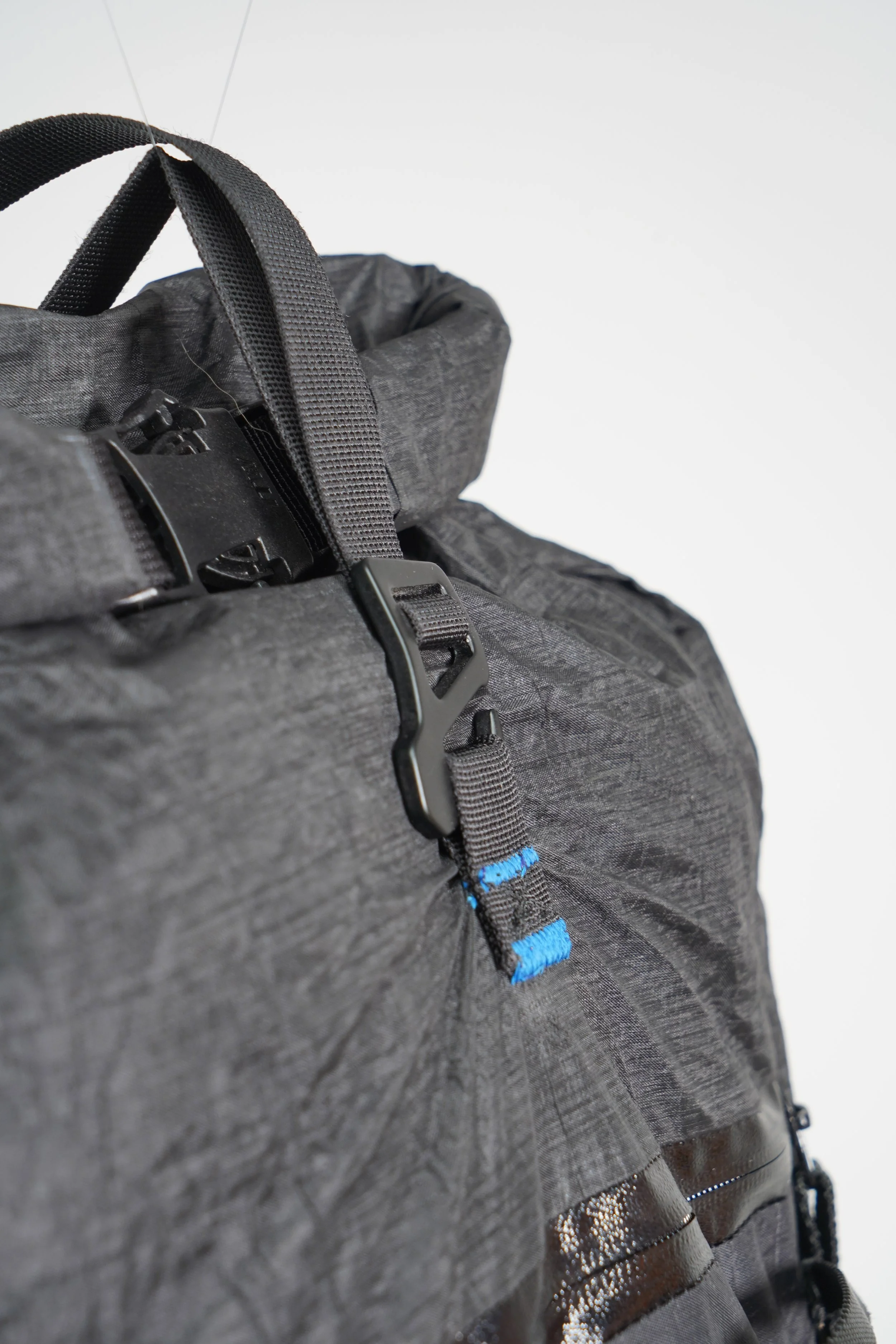
Modular stap system
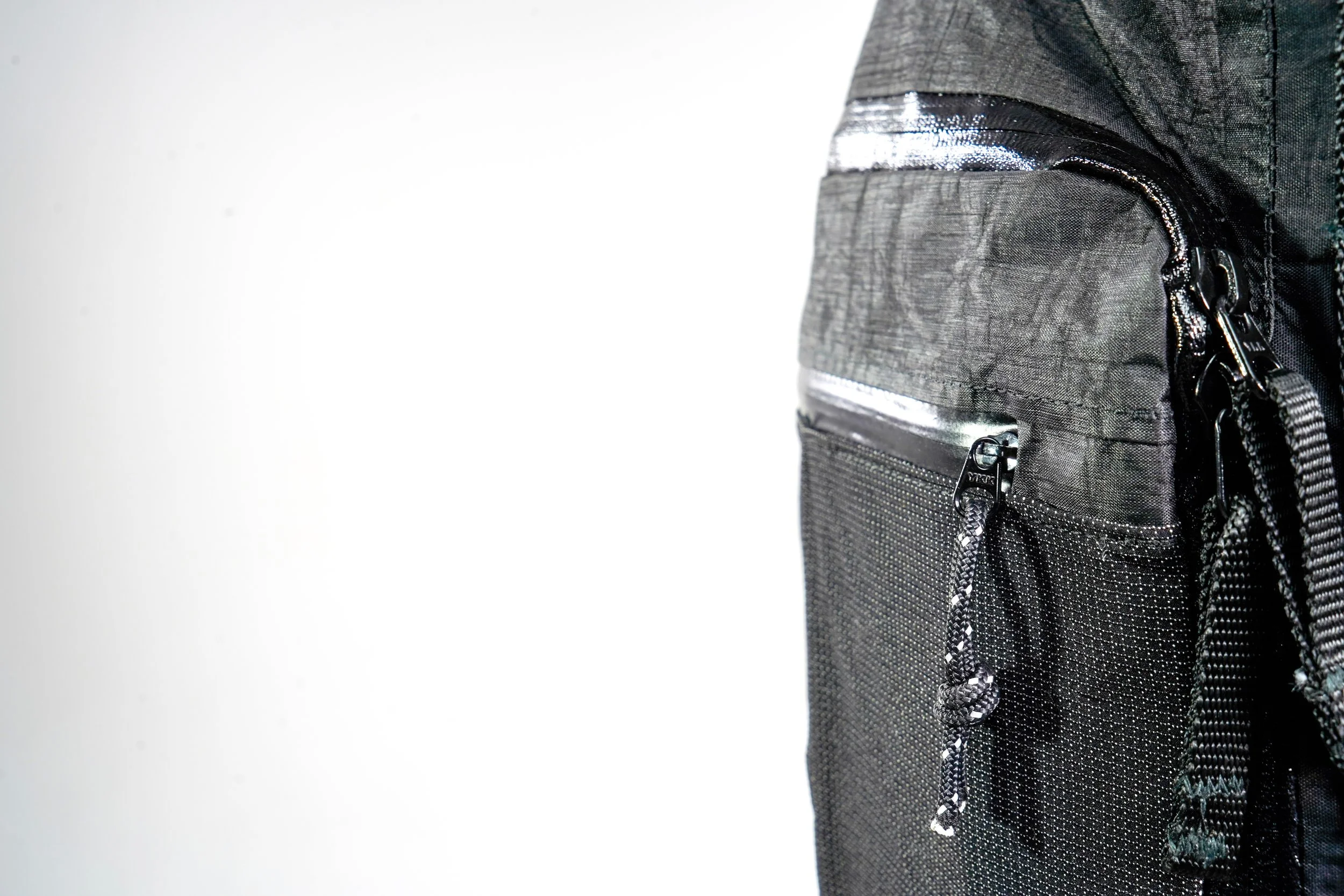
Quick stash zip
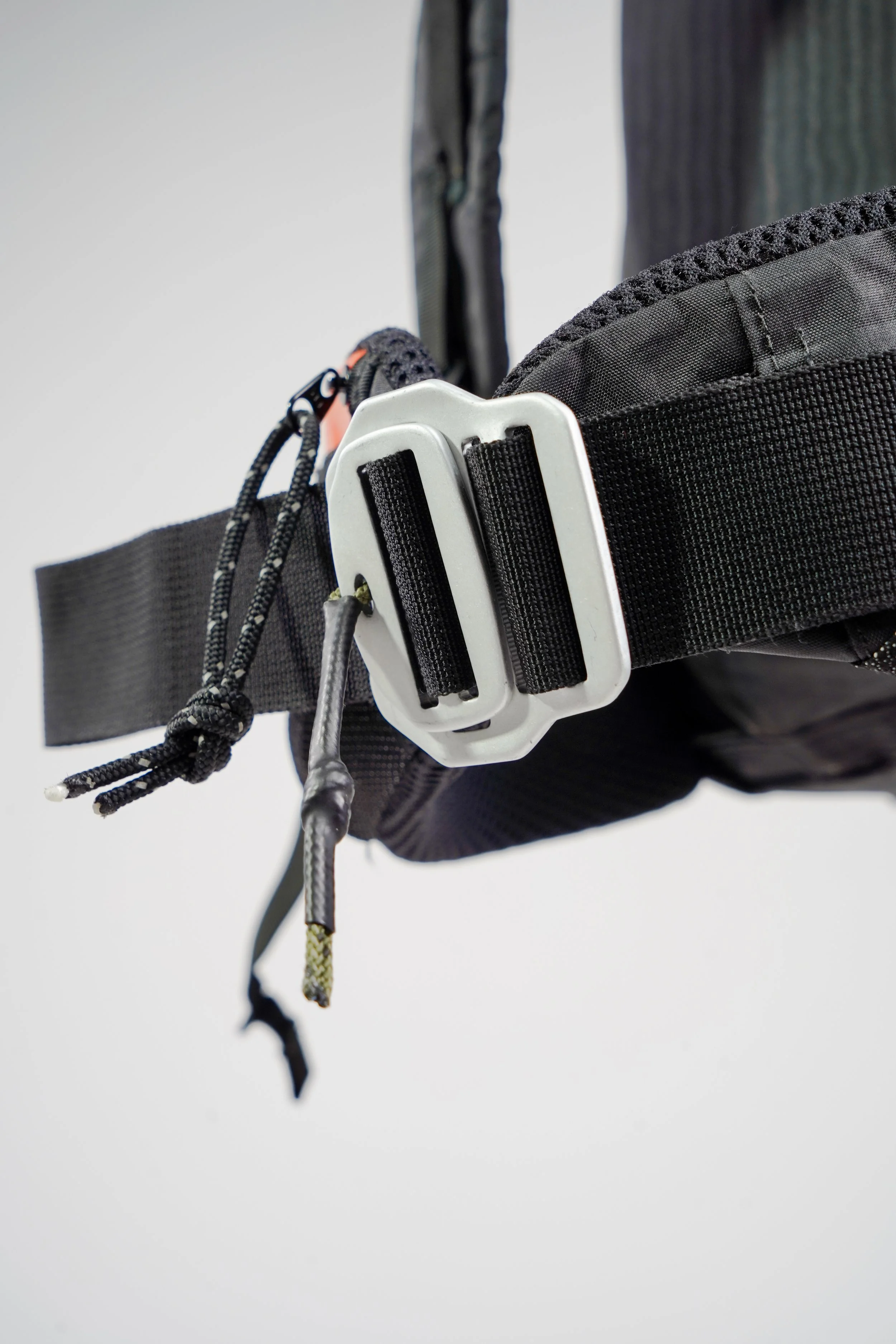
Glove-friendly clasps and buckles
External helmet carry
A-Frame, Diagonal, and Flat Carry options
Rope/Compression Cinch
Features
981 g base weight
2.1 oz Dyneema Composite Fabric
5.0 oz Dyneema Composite Fabric
Hyper D 300
Tech Specs
Walk-Through
A need for speed…
Whether it’s uphill travel or a rescue scenario, speed and efficiency are at the core of backcountry touring. Where most packs stop, the Velox UL30 goes one step further, integrating a dedicated med kit directly into the avalanche gear sleeve, so there is no friction between rescuing and providing care.
Testing revealed an average of 39s saved in the rescue process when compared to other packs on the market.
Interviews
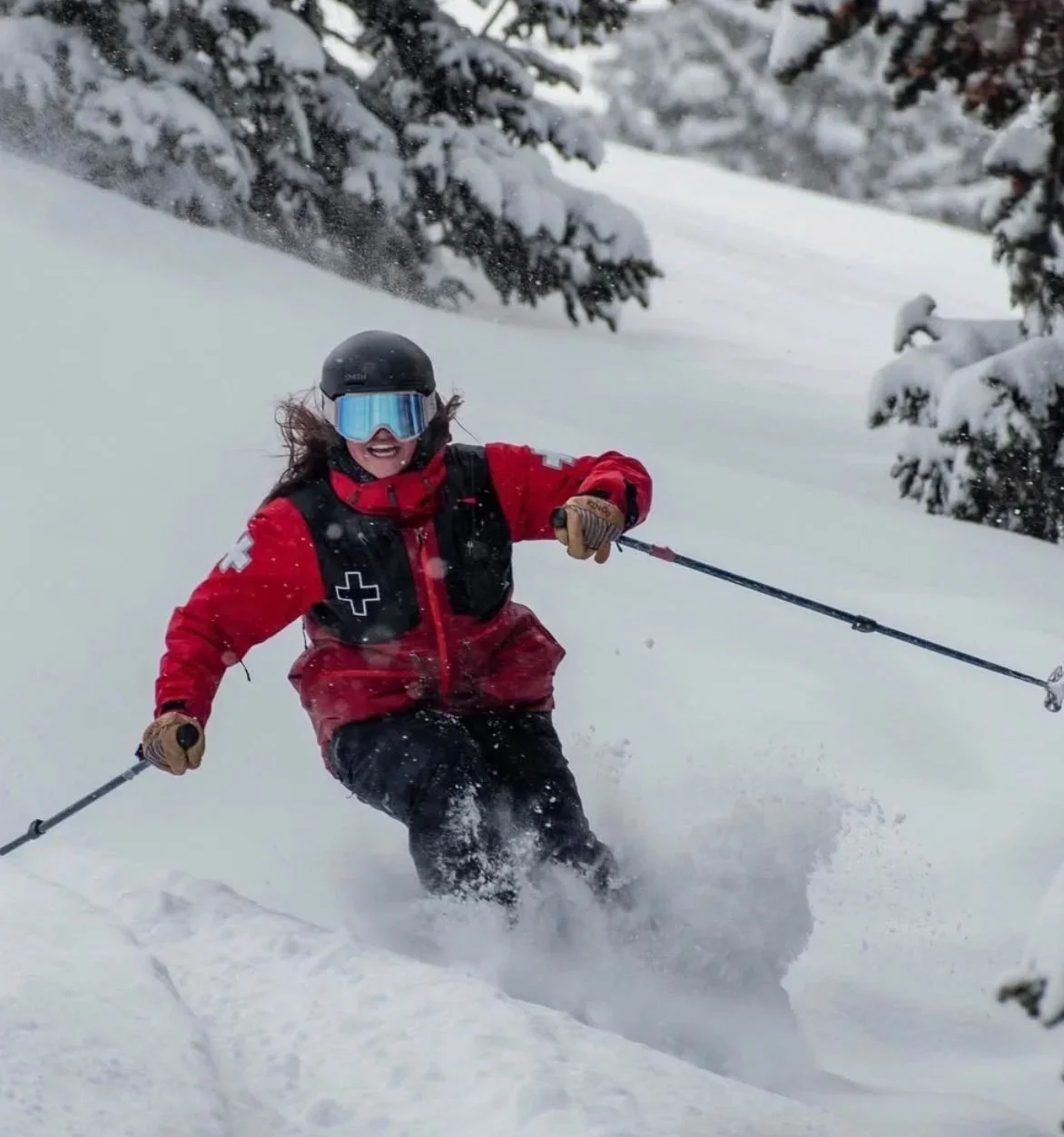
"I carry a more extensive med kit than most of the folks I know. There are so many unprepared people in the backcountry that don't even realize it."
- Sofi Toms, Ski Patrol
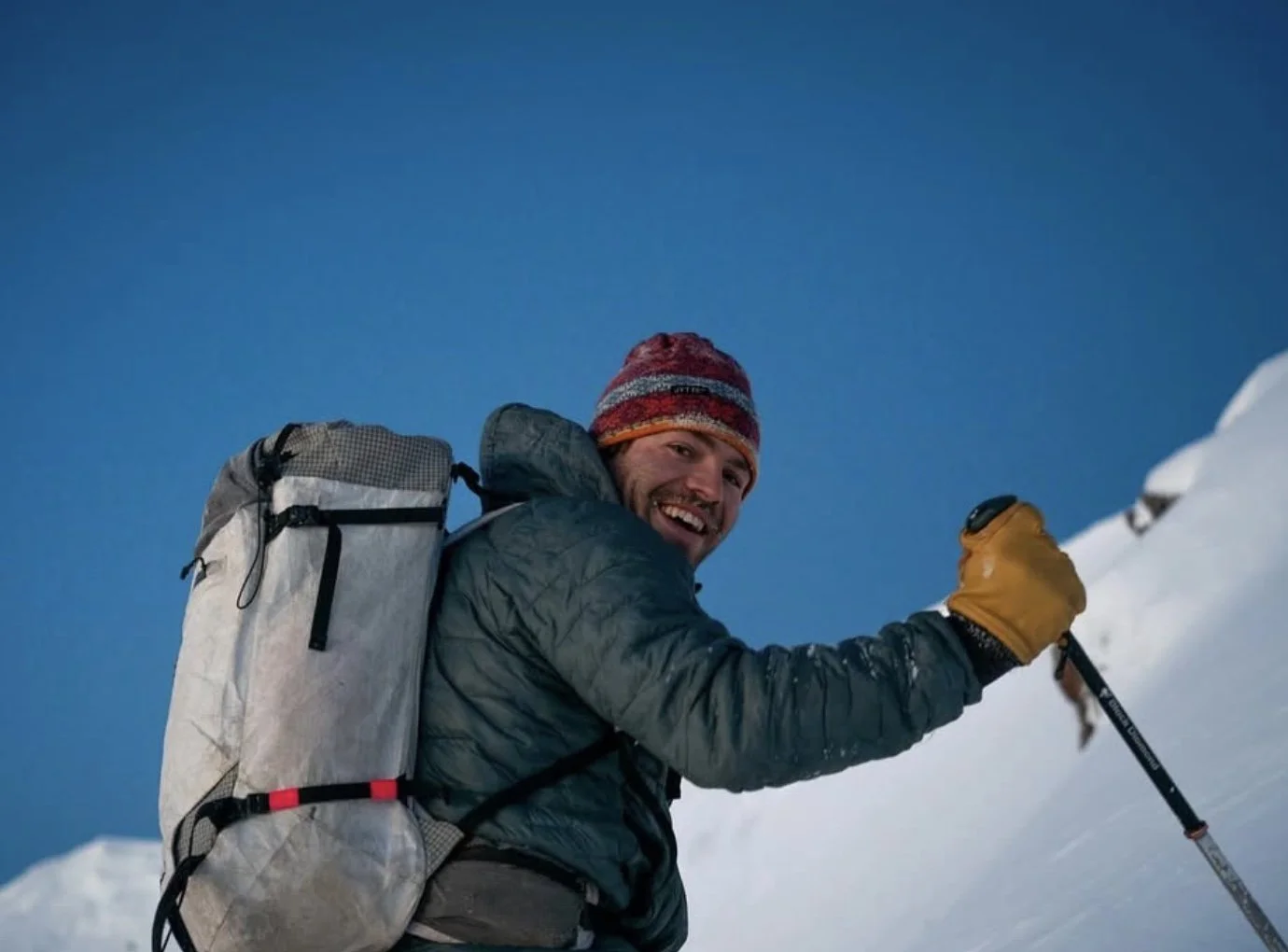
"A feature that seems to be missing on a lot of packs out there is the ablility to store wet gear away from dry layers. It's always just a big pocket or you have to strap it outside"
- Zach Masi, Pro Skier
Market Research
Insights
Cultural
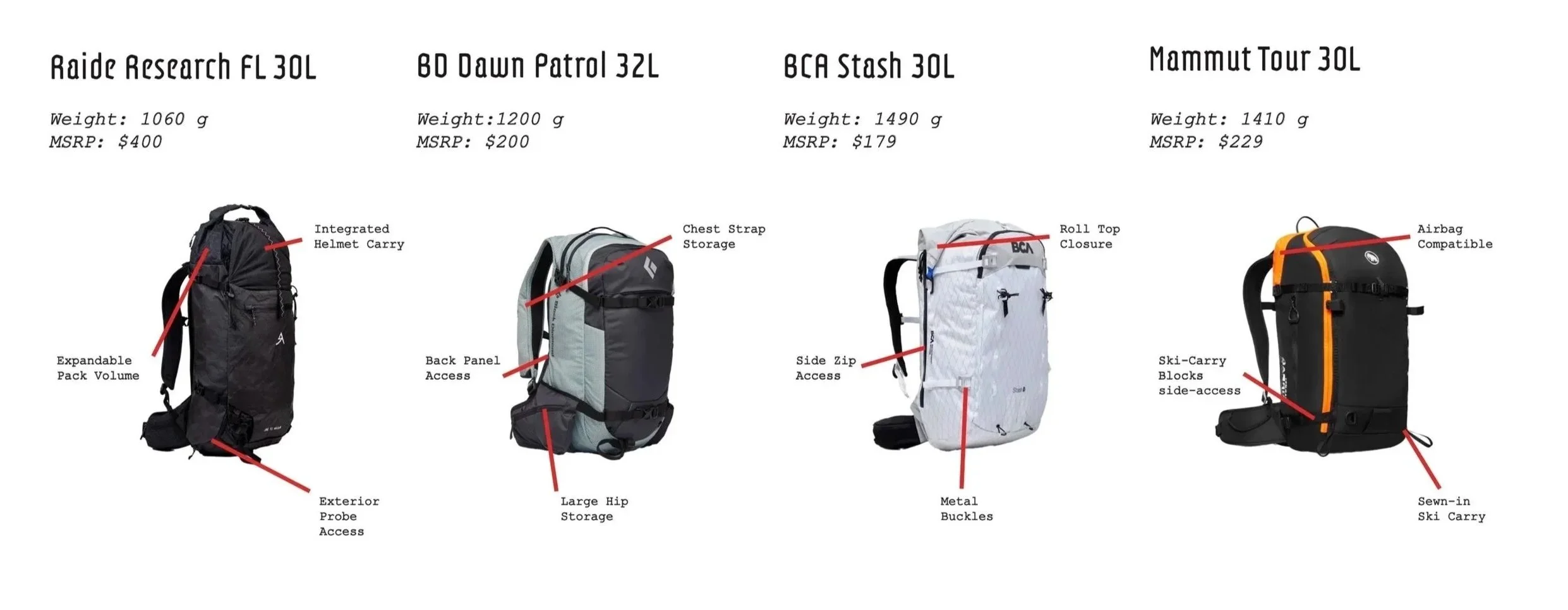
The avalanche culture puts emphasis on preventing + recovery in slides, as it should. However, there is a lack of preparedness for the emergency care necessary after the recovery of an avalanche victim.
Pack Coherence
Packs on the market have conflicting features. For example, a ski carry that blocks the side zip.
Versatility
External storage and warm weather touring is overlooked. Touring is not exclusive to cold days… packs should be versatile between cold winter + sunny springs days.
Development


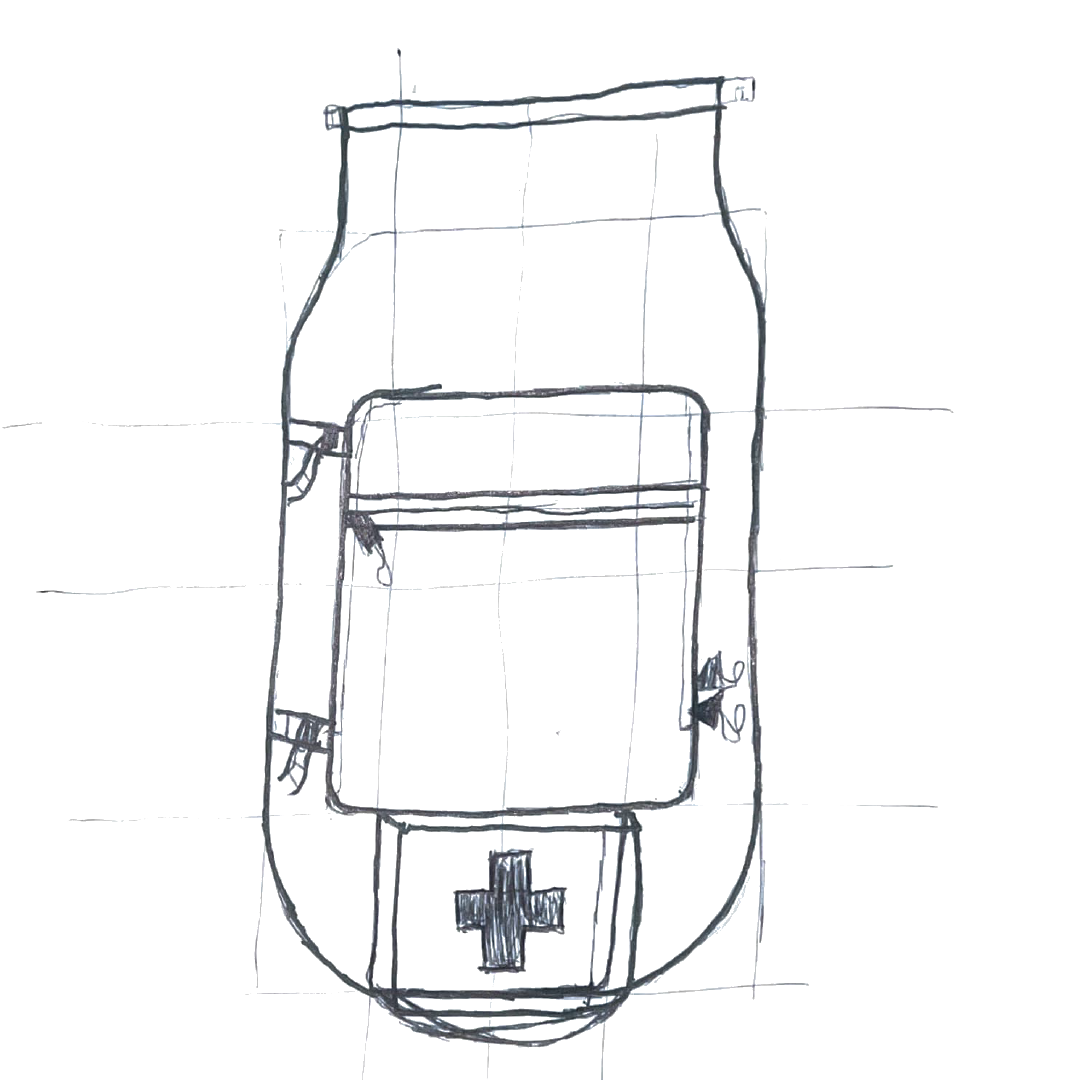

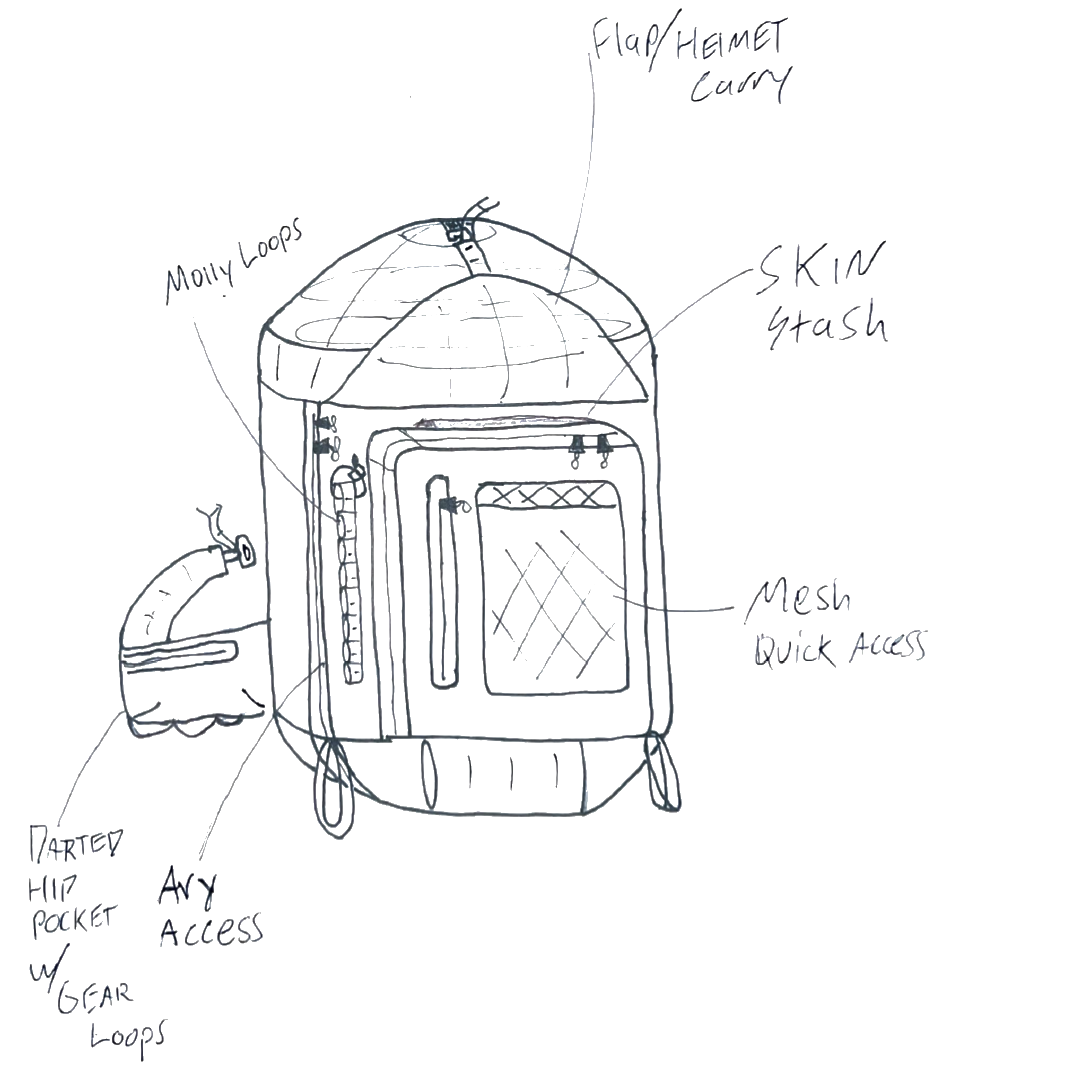
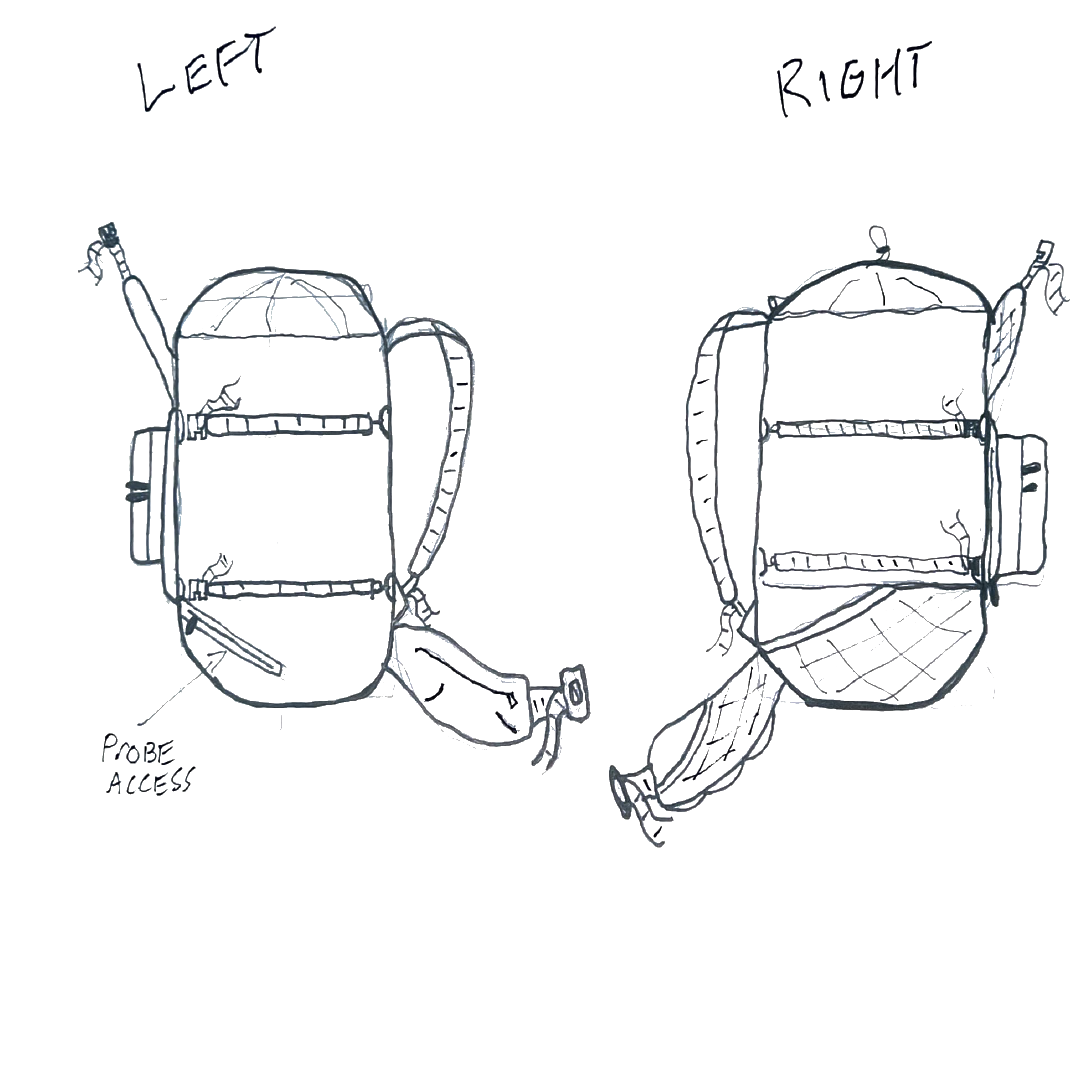
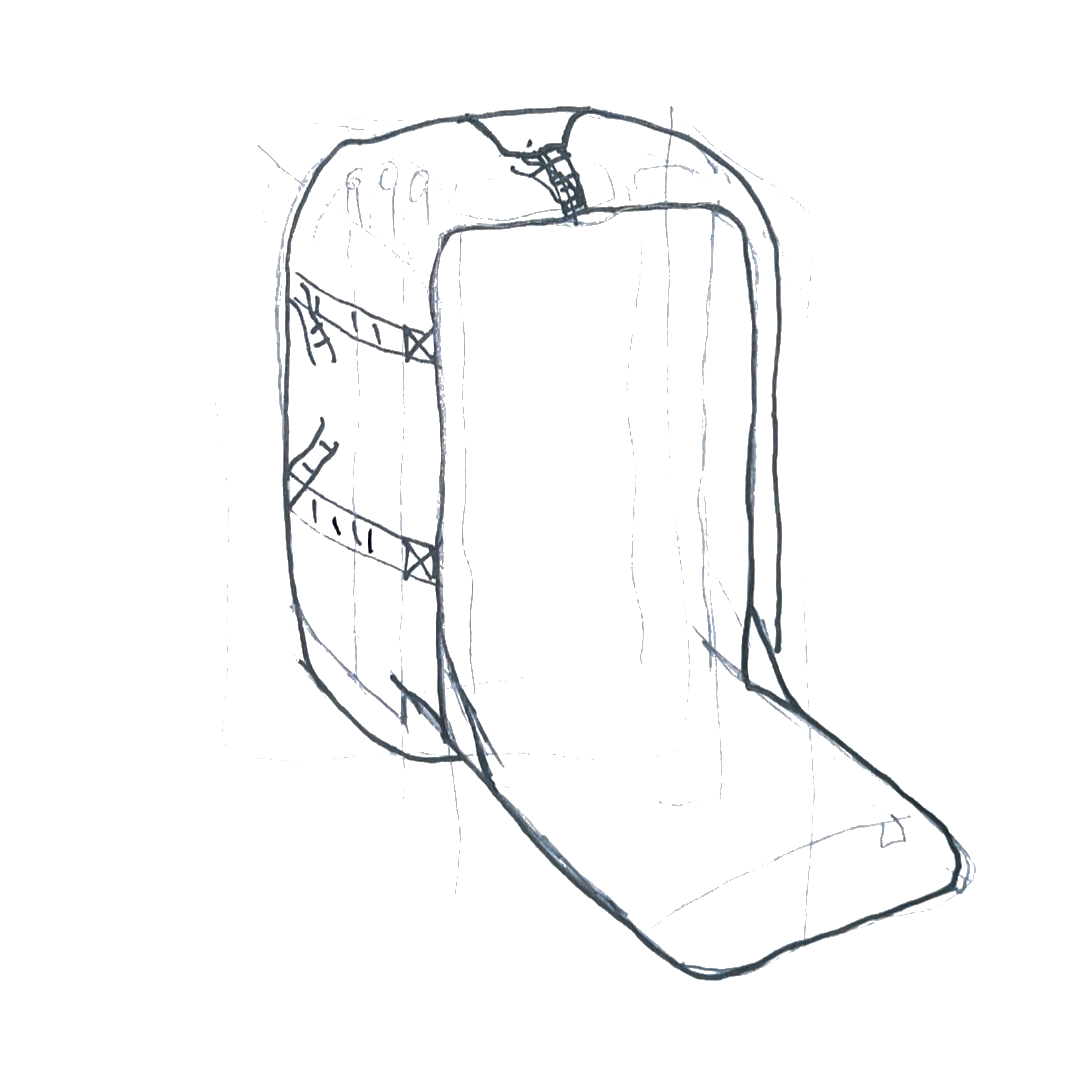
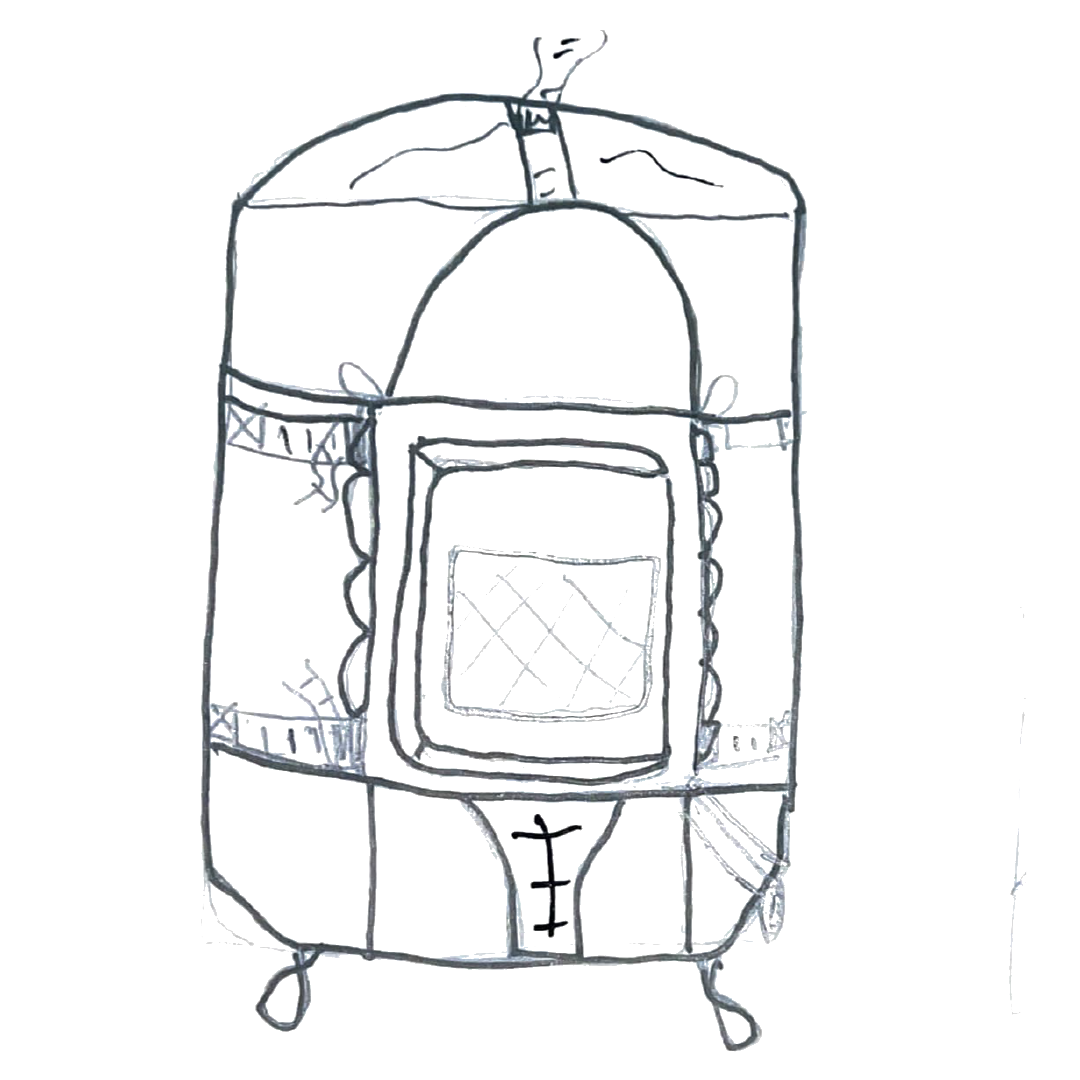
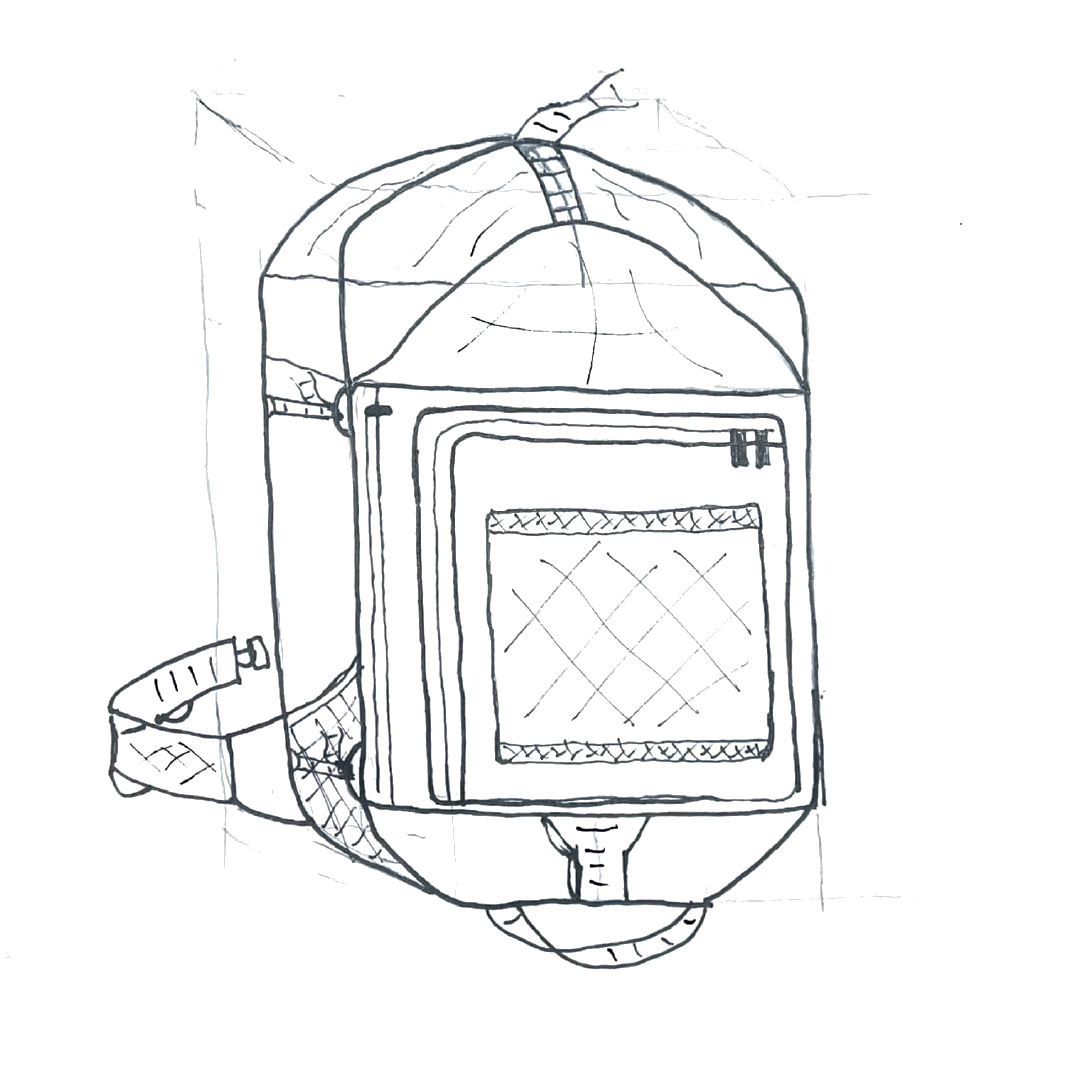
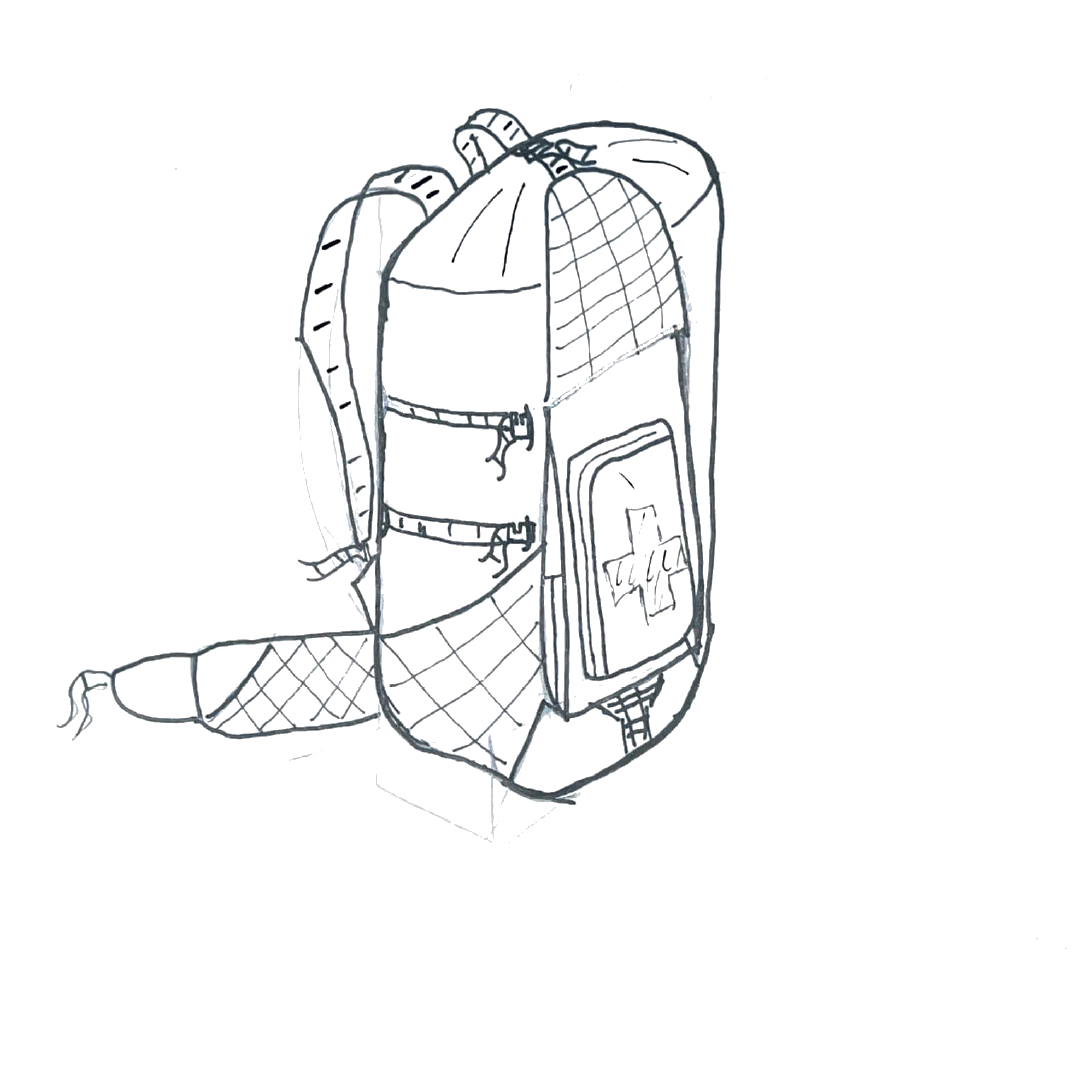
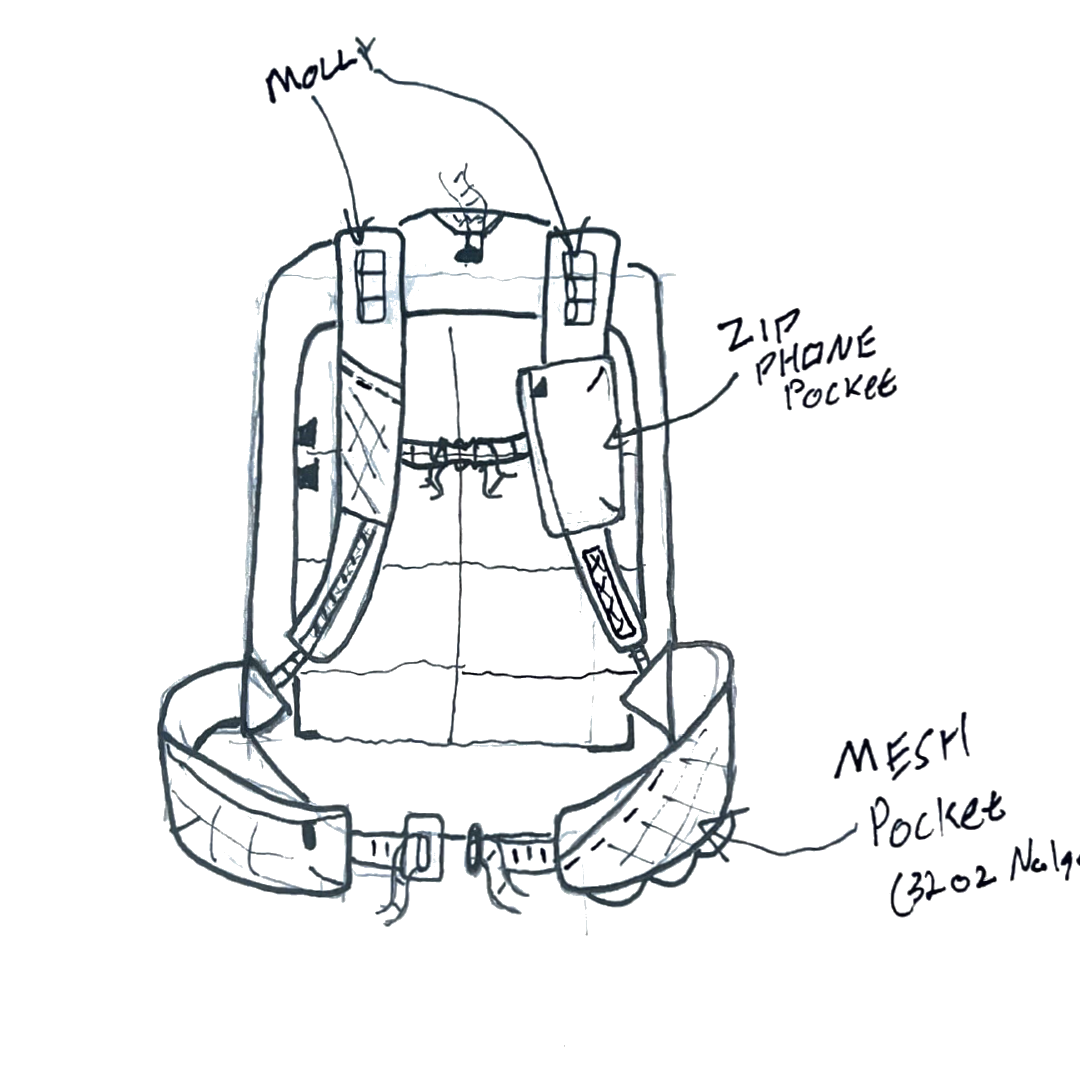
Prototyping
Phase 1
1/3 scale prototypes to gauge form + dimensions of the pack, e.g, angling of the boot, proportions of depth vs height….
Phase 2
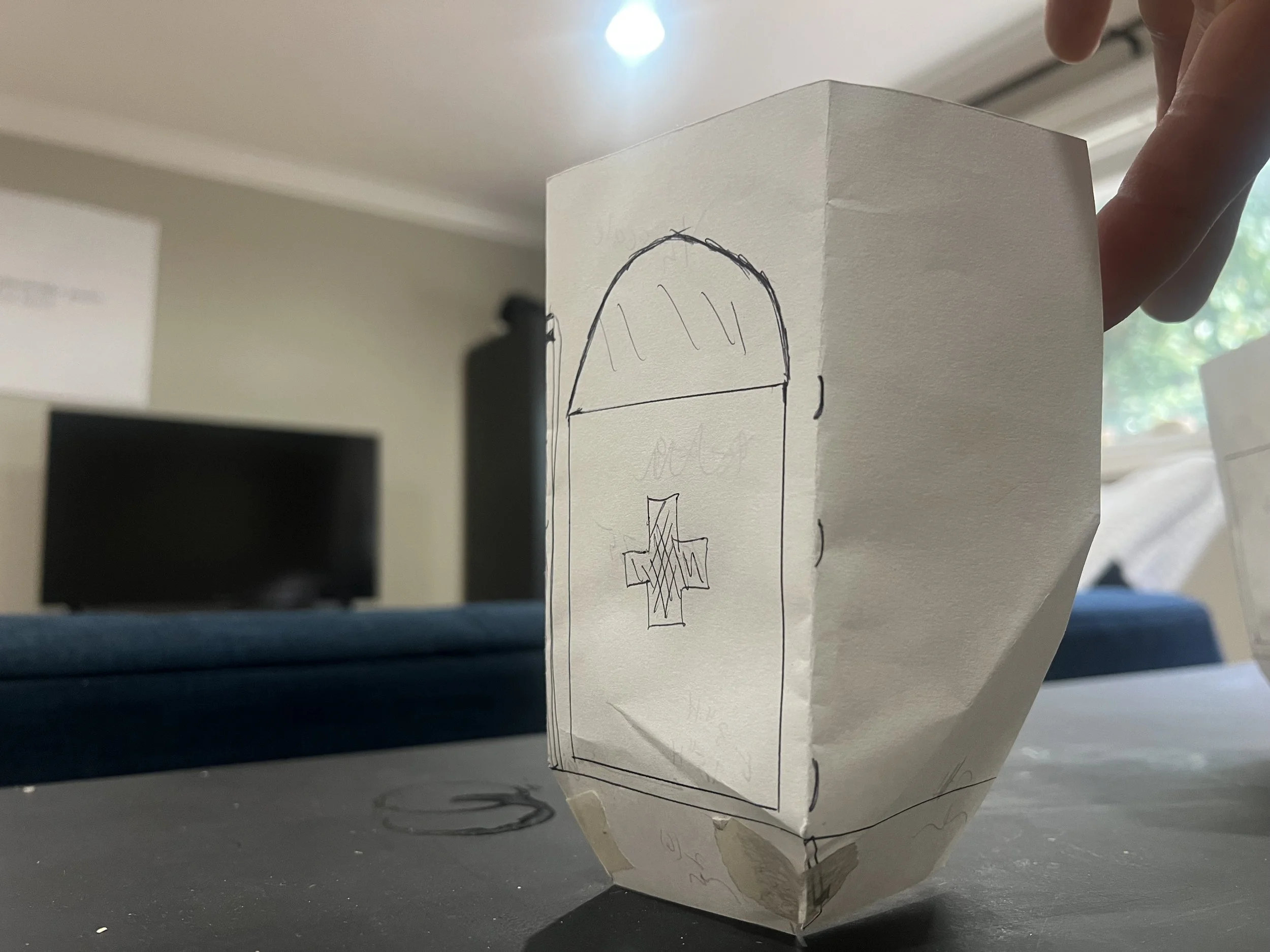
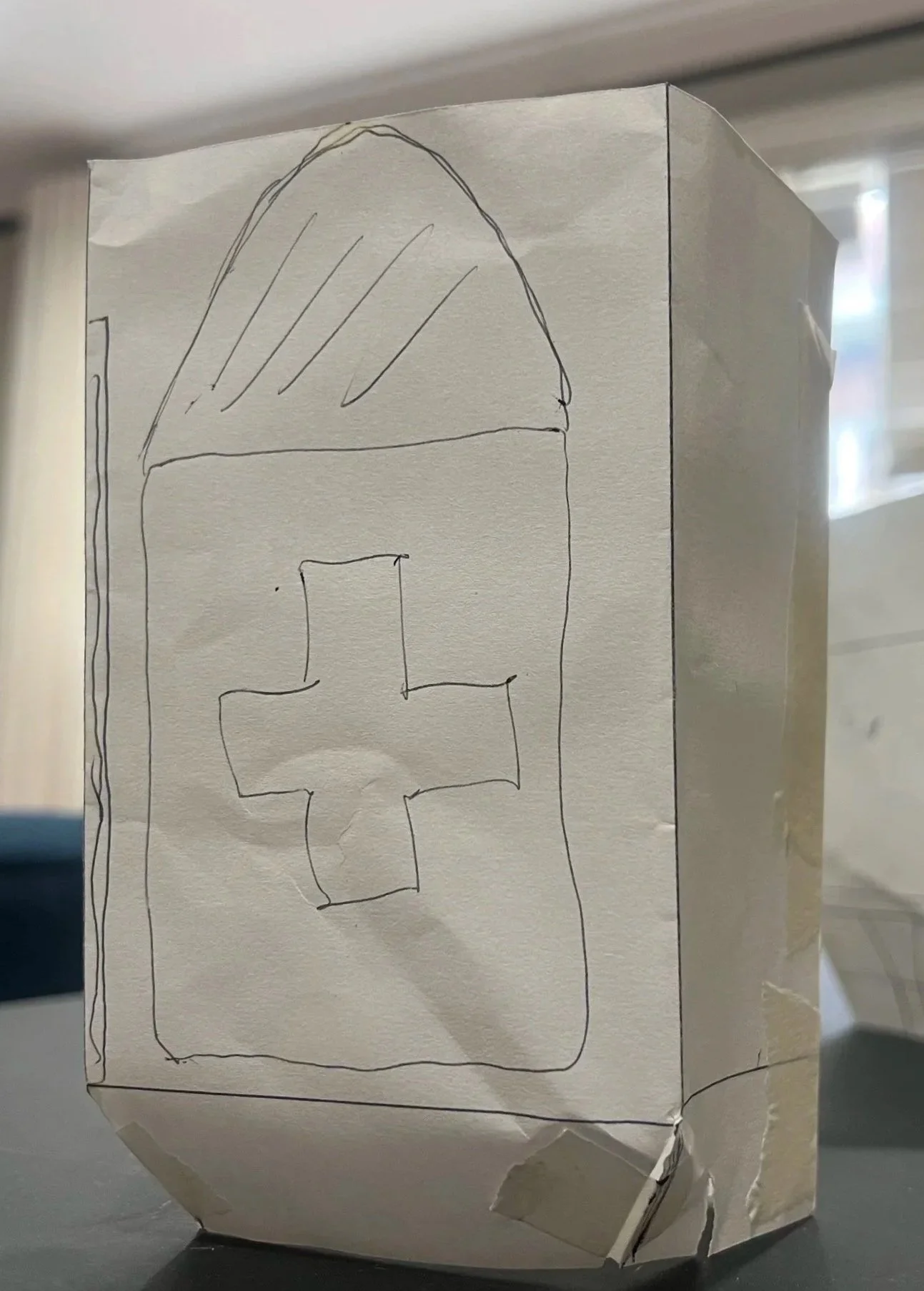
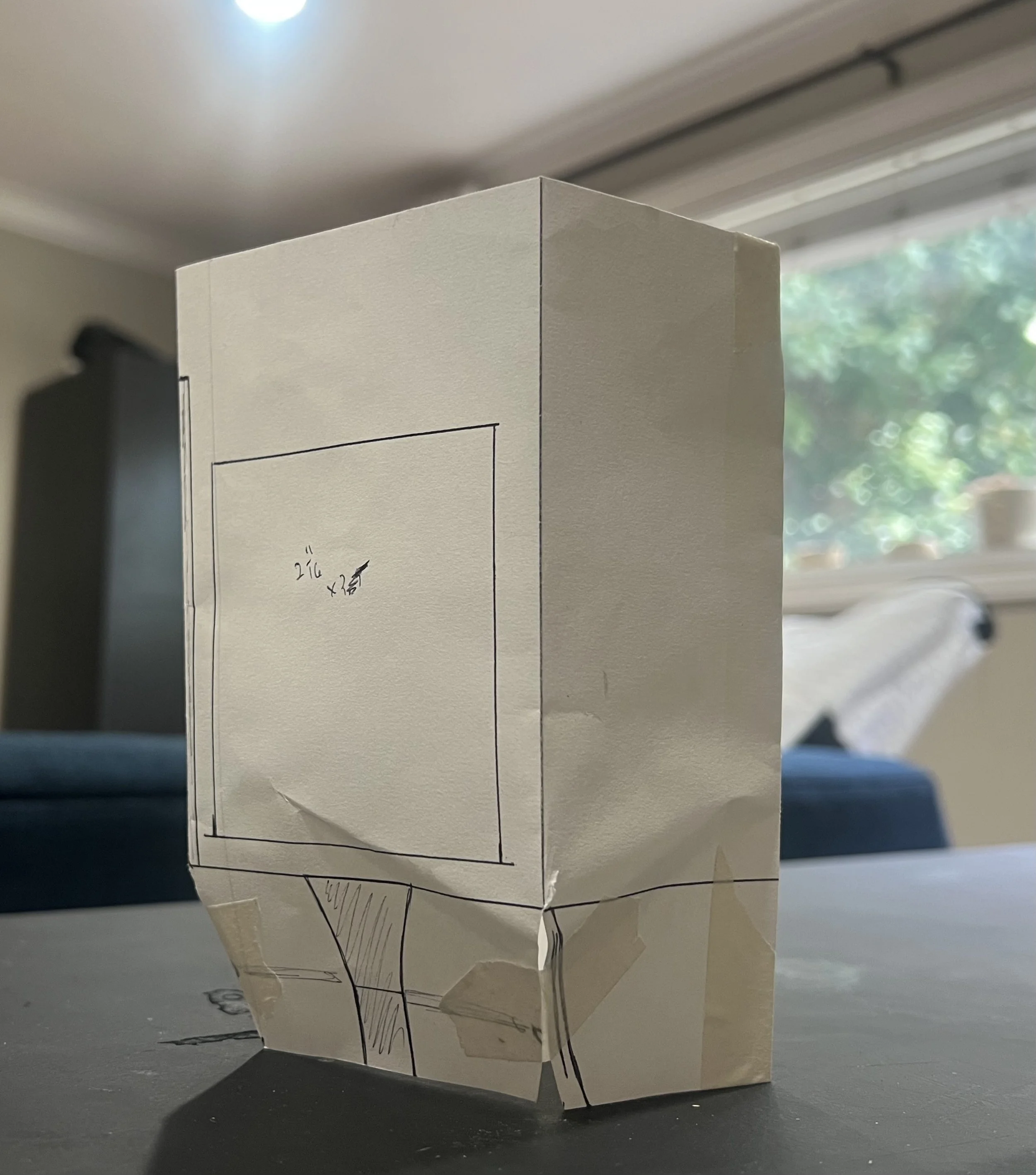
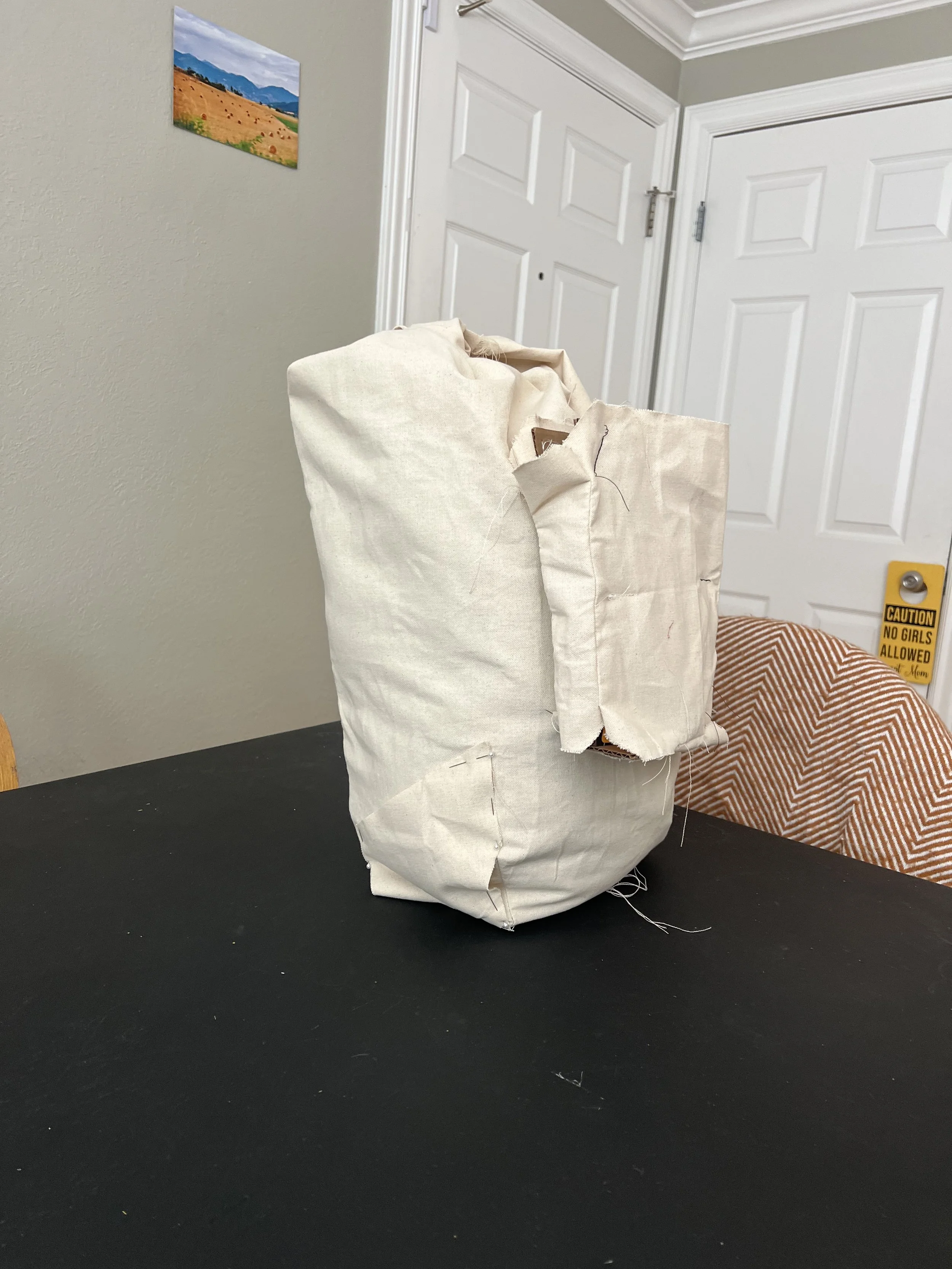
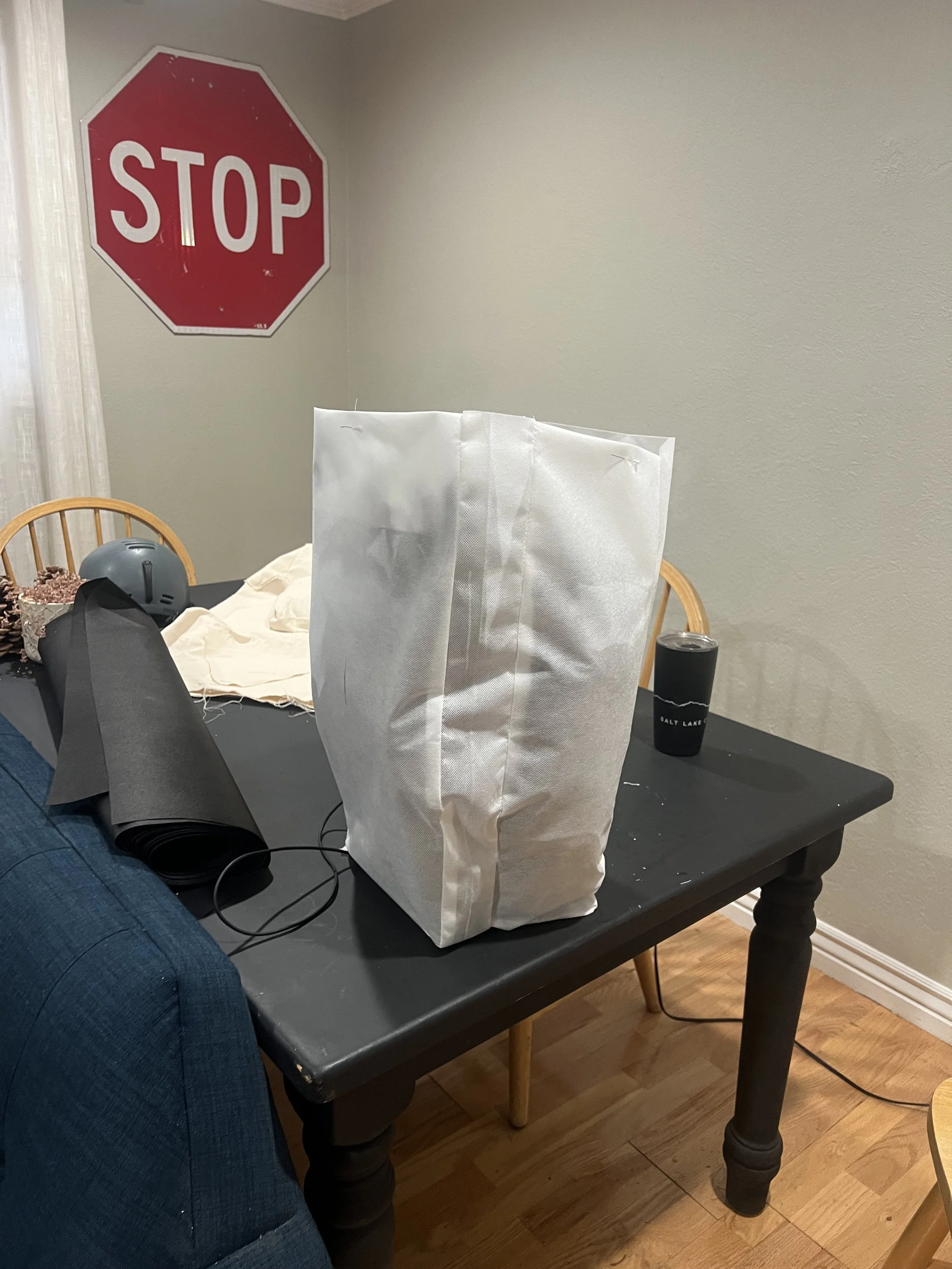
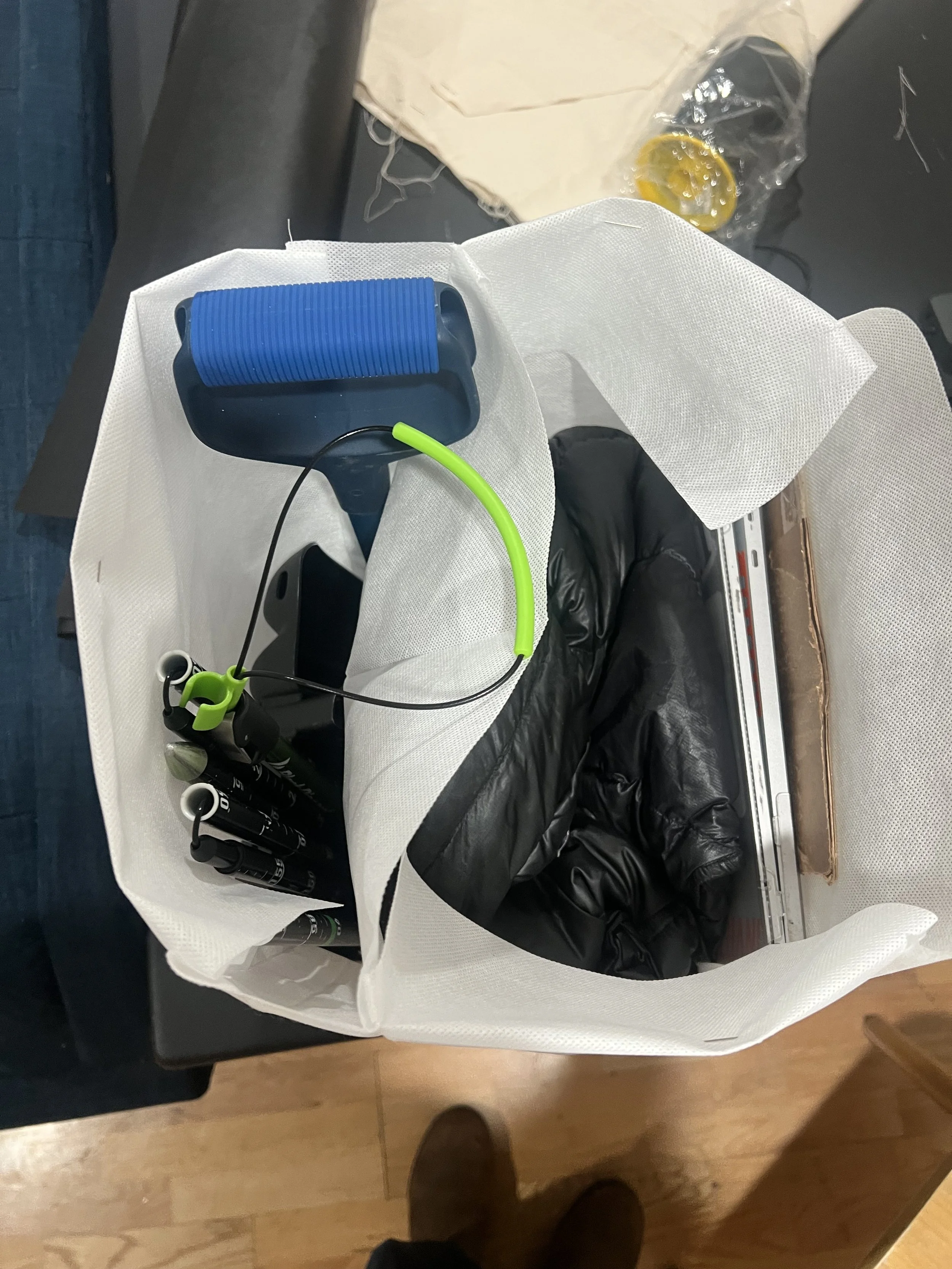
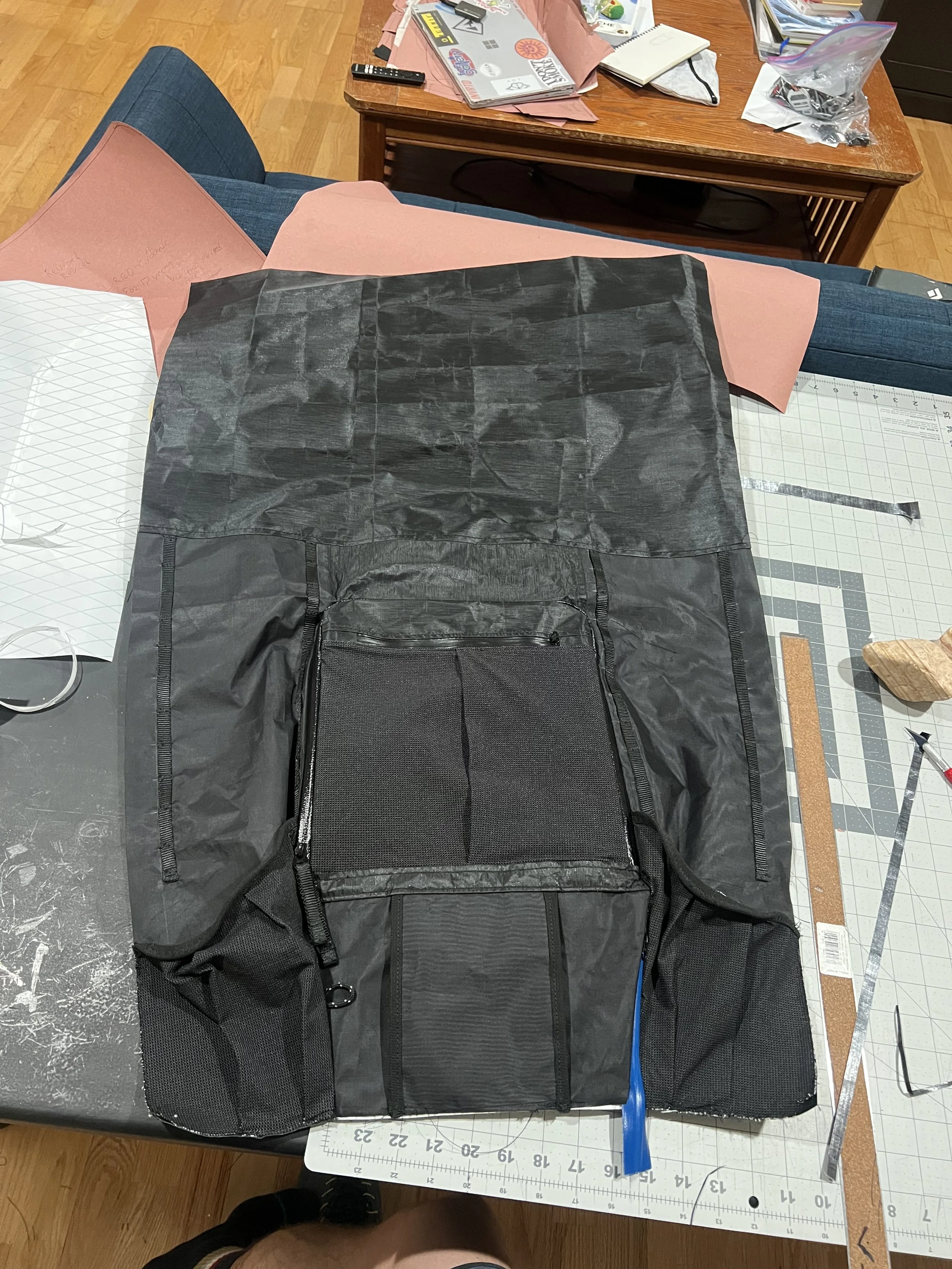
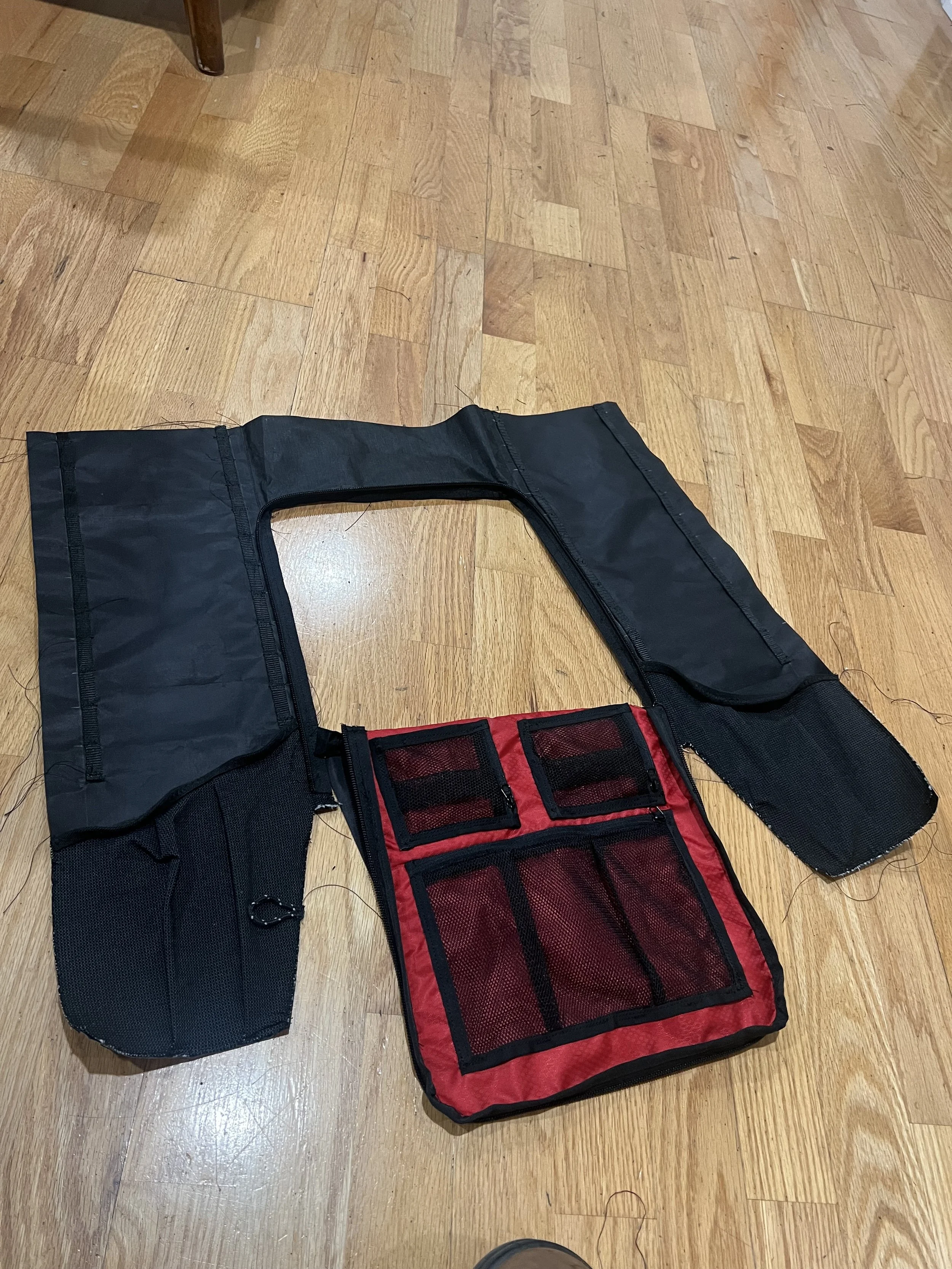
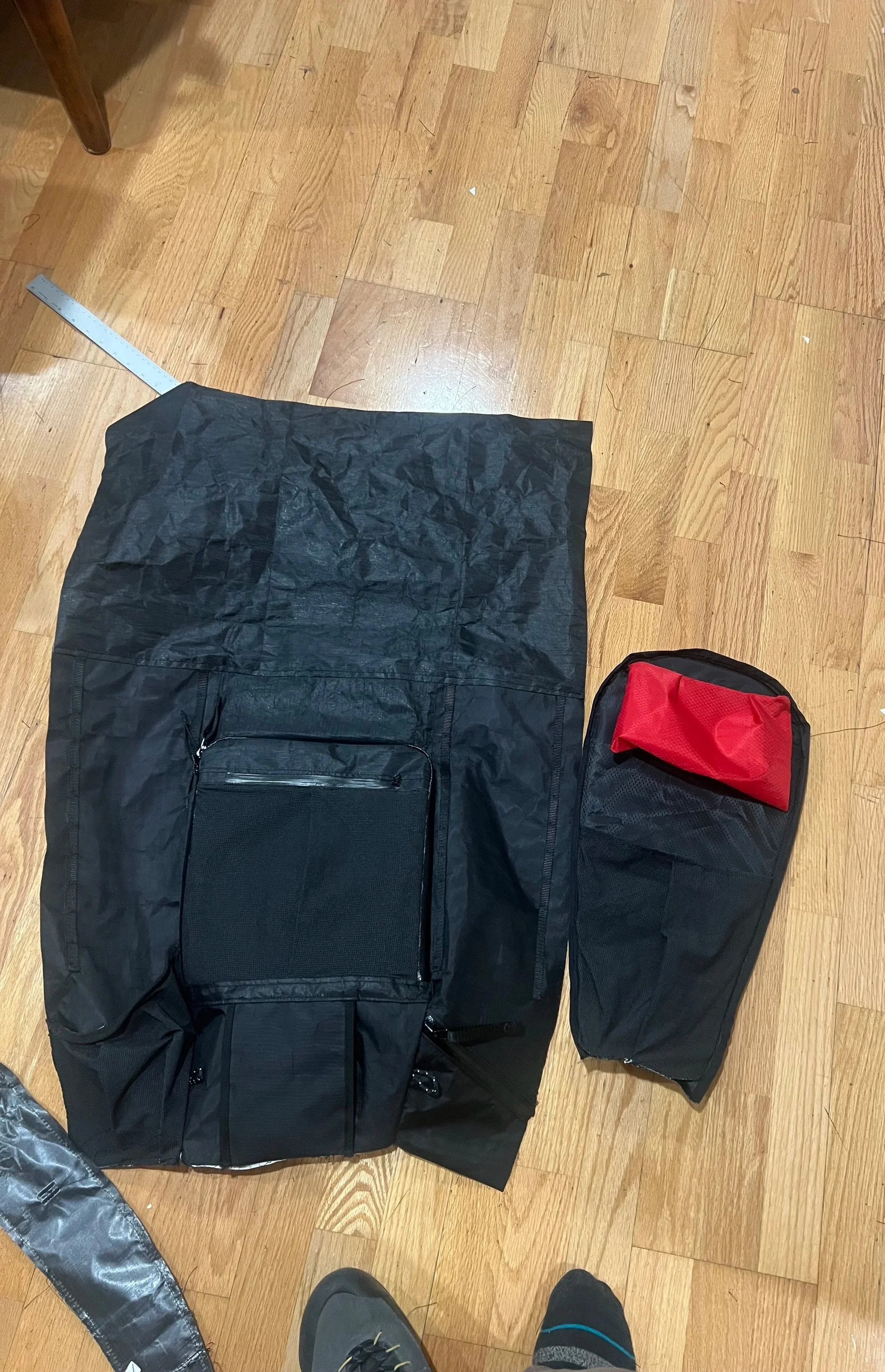
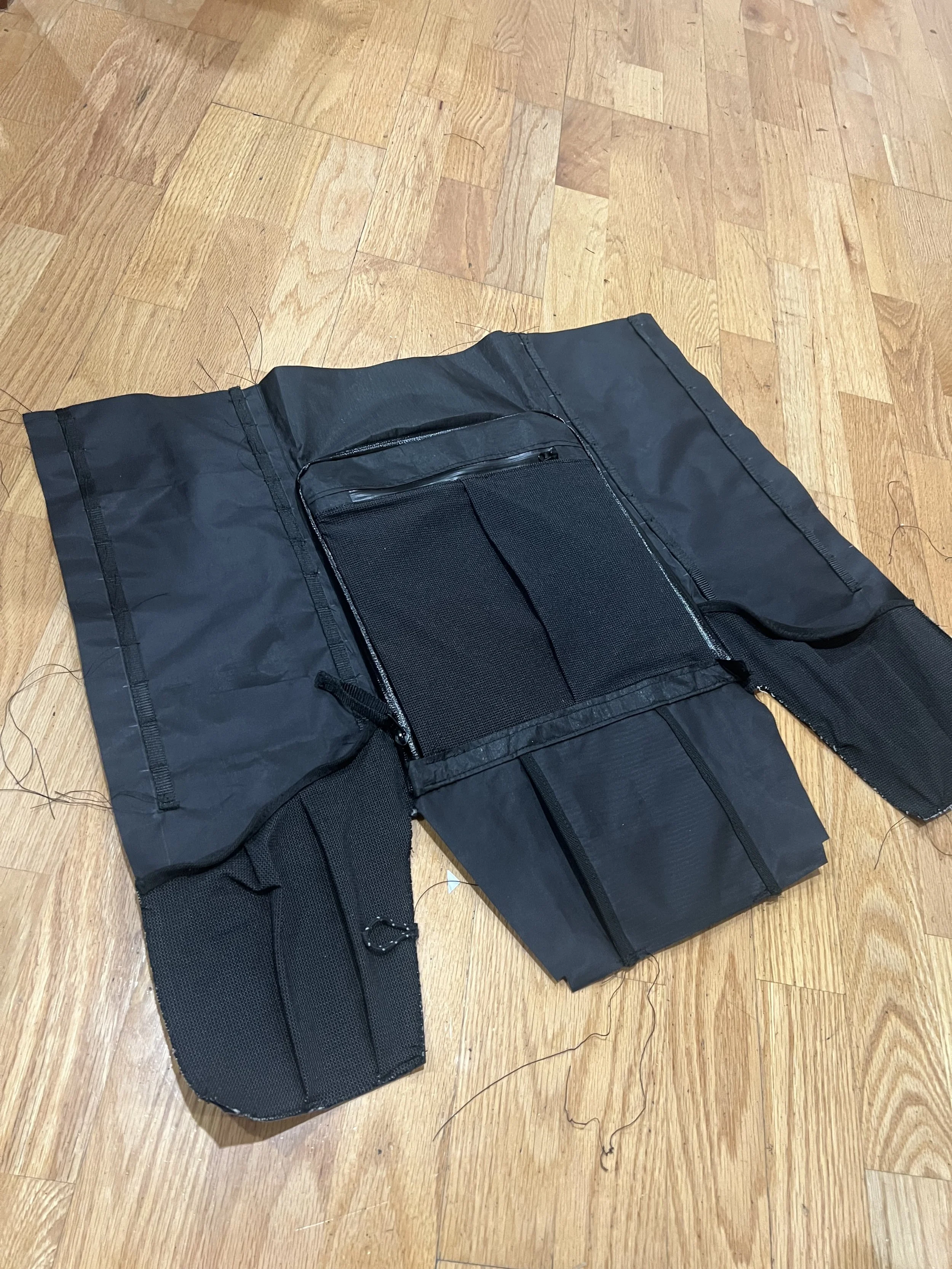
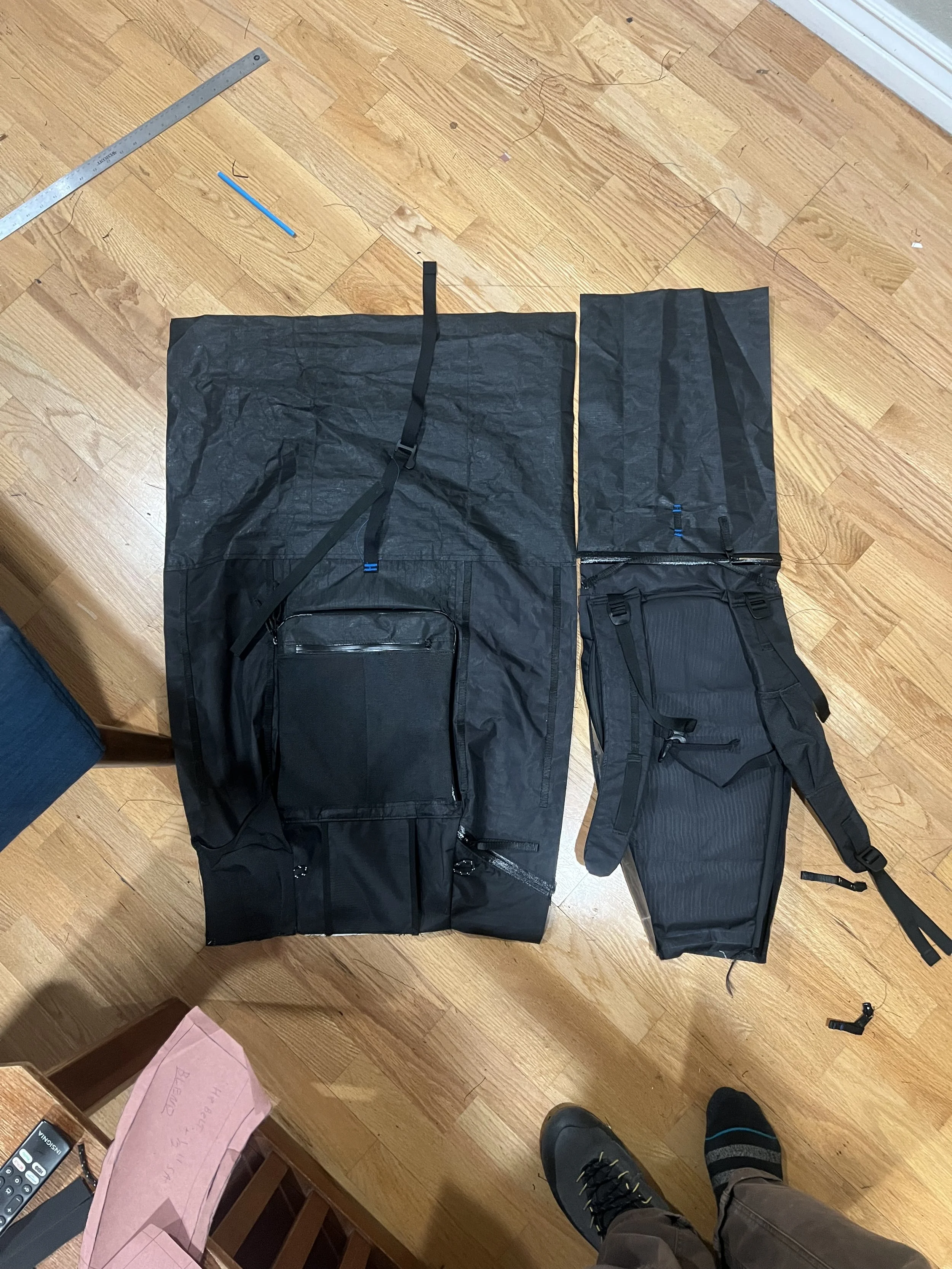
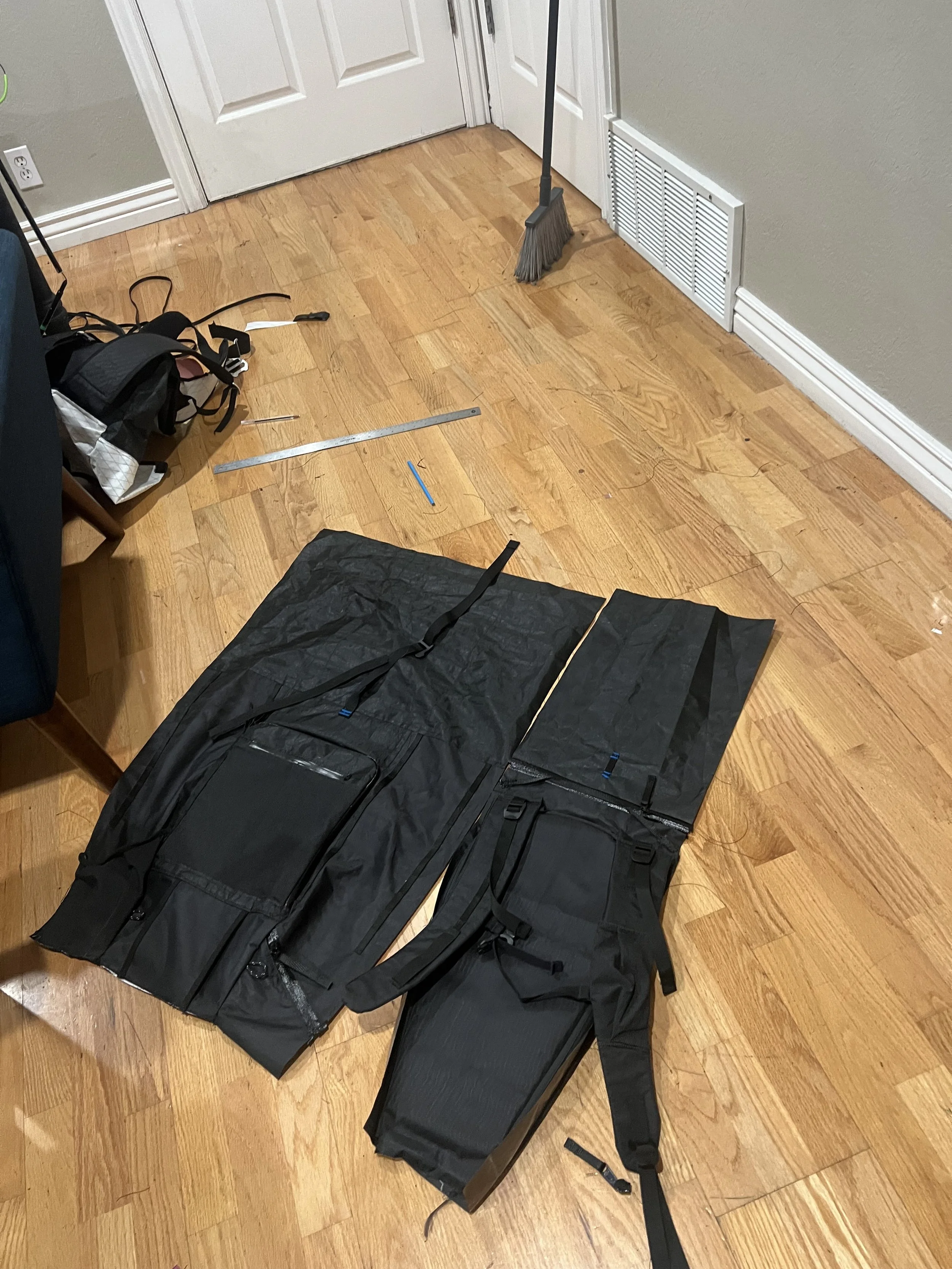
Prototypes increase to full scale. Starting with paper and moving into canvas for speed and cost. Ultimately, most pattern iterations were done with interfacing due to cost effectiveness and its rigidity more closely aligned with the final material, a mixture of 2 oz and 5 oz Dyneema Composite Fabric. The interfacing held its shape whereas canvas or other cheap materials sagged and lost form.
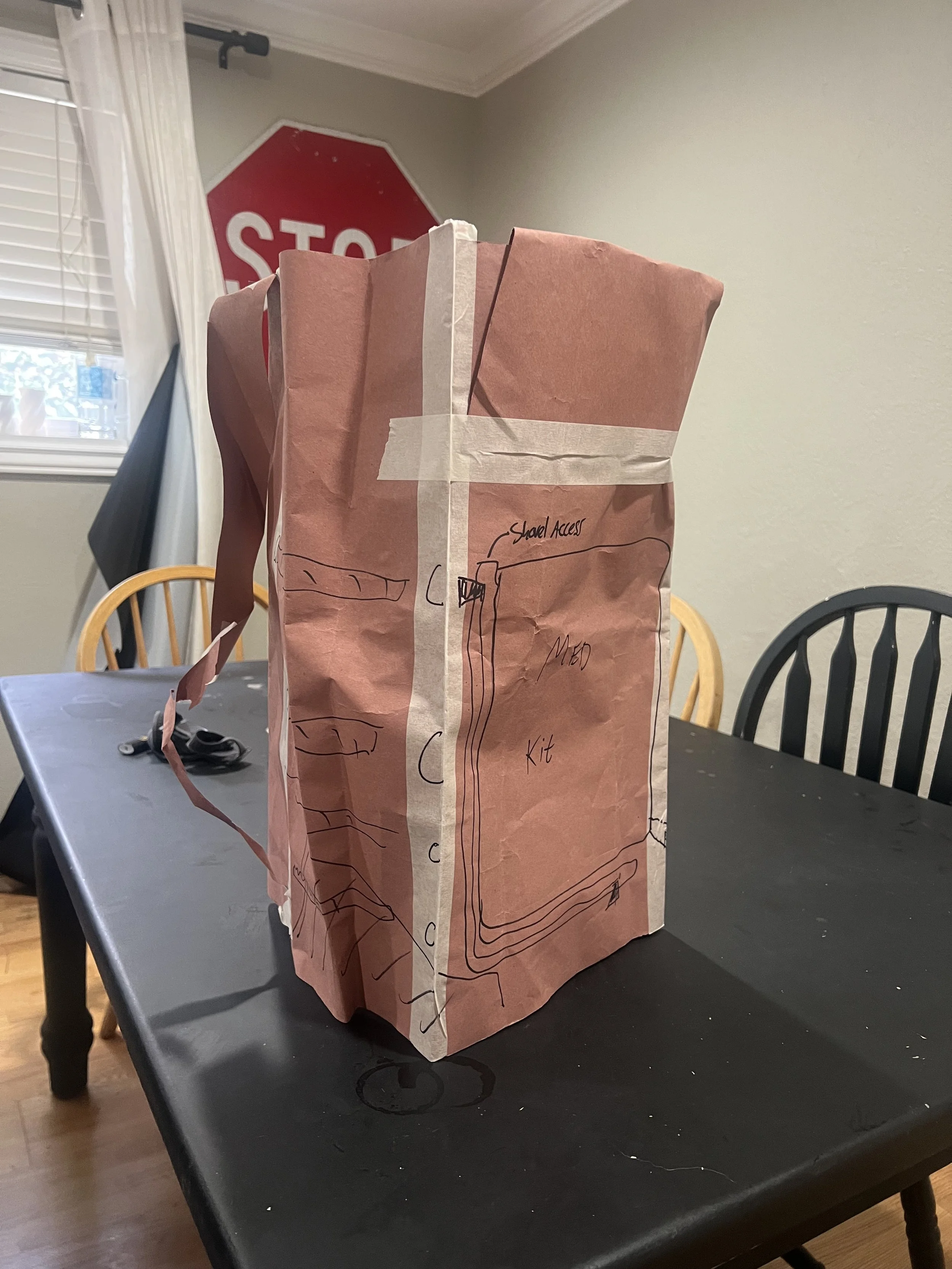
Phase 3
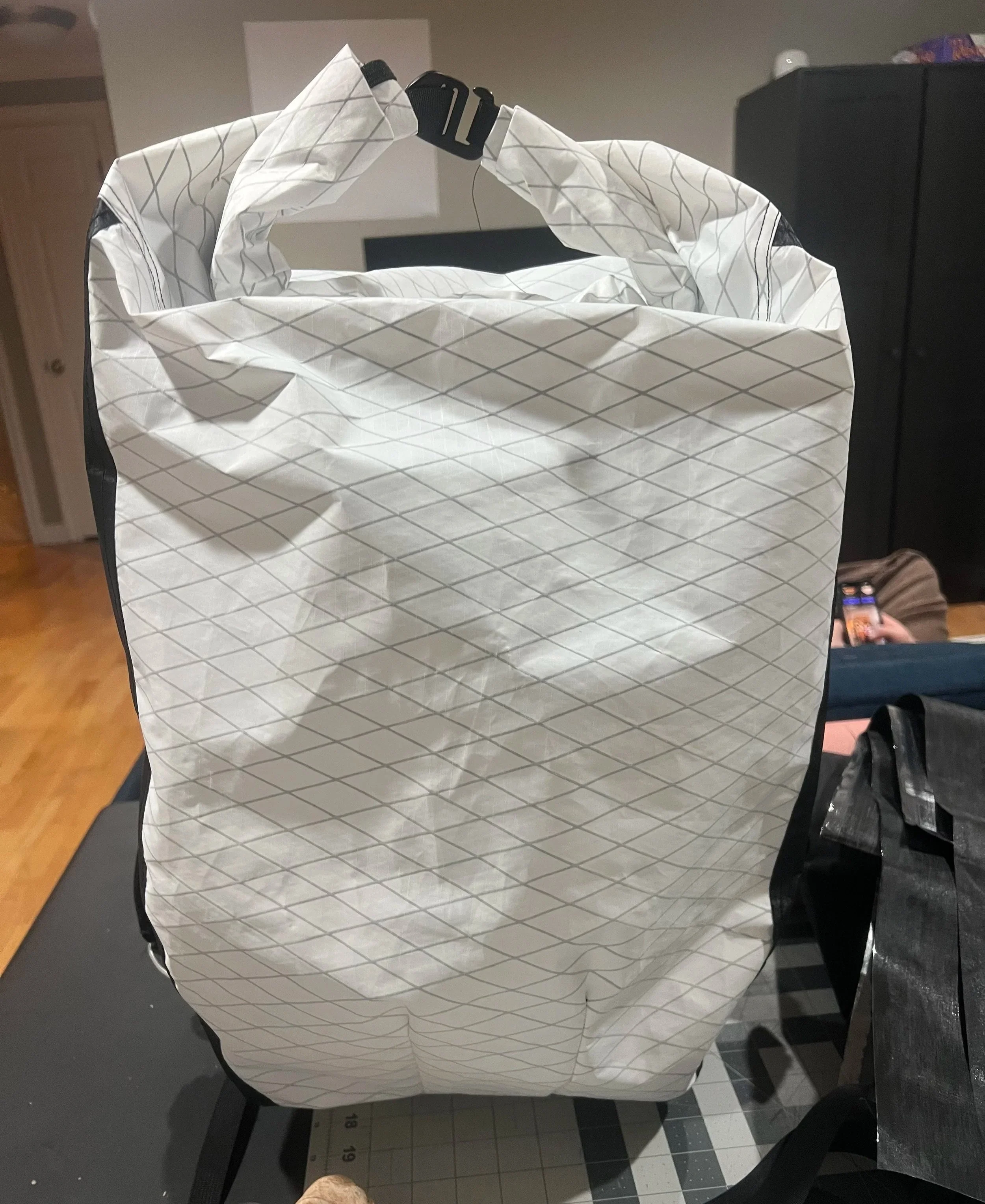
As the patterning became more dialed in, the last two prototypes were produced in x-pac, the most similar material on hand to the final. These prototypes sought to hone in on the harness construction + placement, as well as weight, “feel”, and other aspects of the pack.
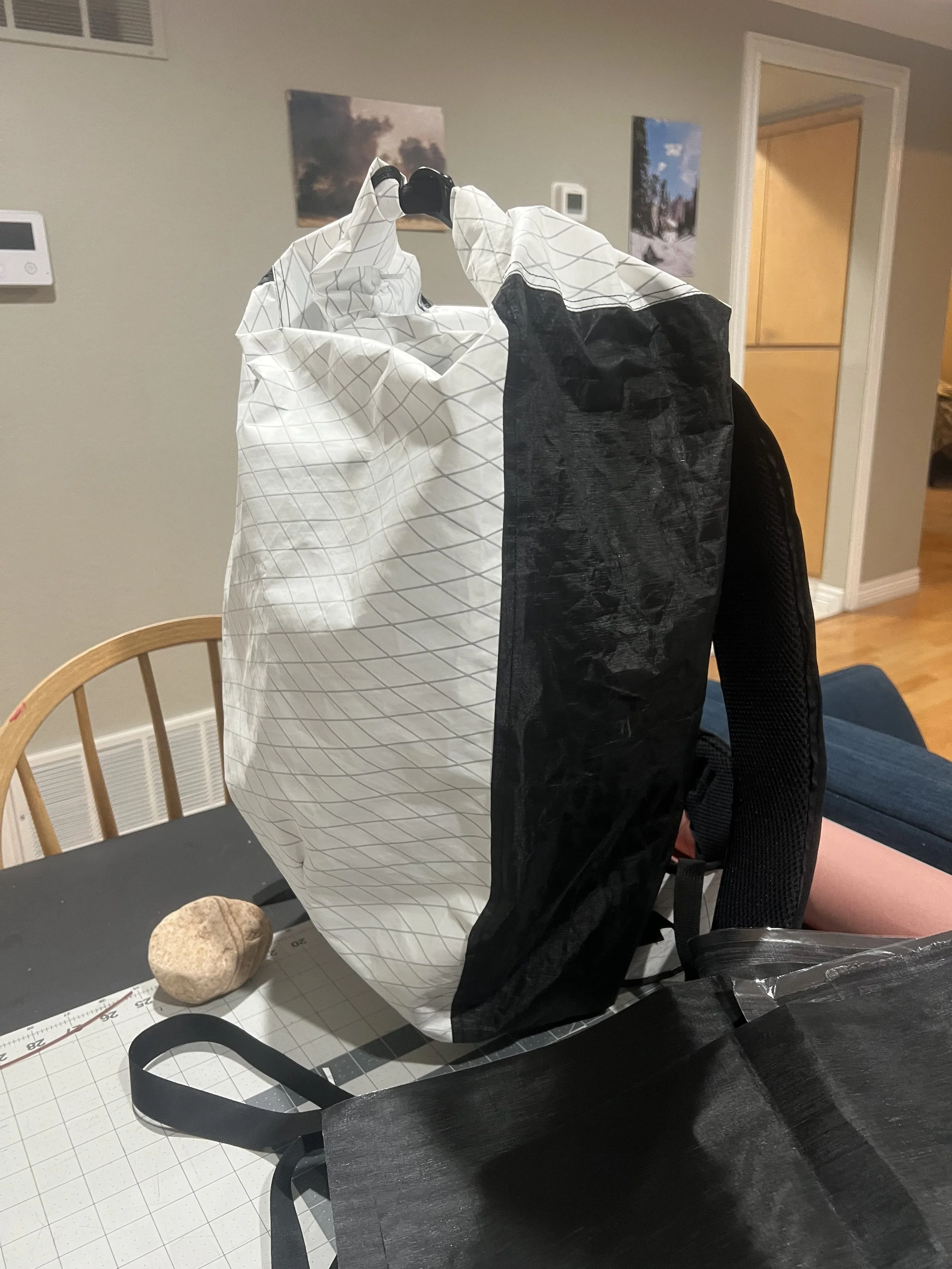
Final Construciton
For: DES 4510: Senior Capstone
Date: Spring 2025
Skills: Sketching, Pattern Making, Sewing, Prototyping
Tools: Juki 5410, Adobe Illustrator/Photoshop, Procreate